Listening to Houses.
Editorial design
Berlin - Germany 2026
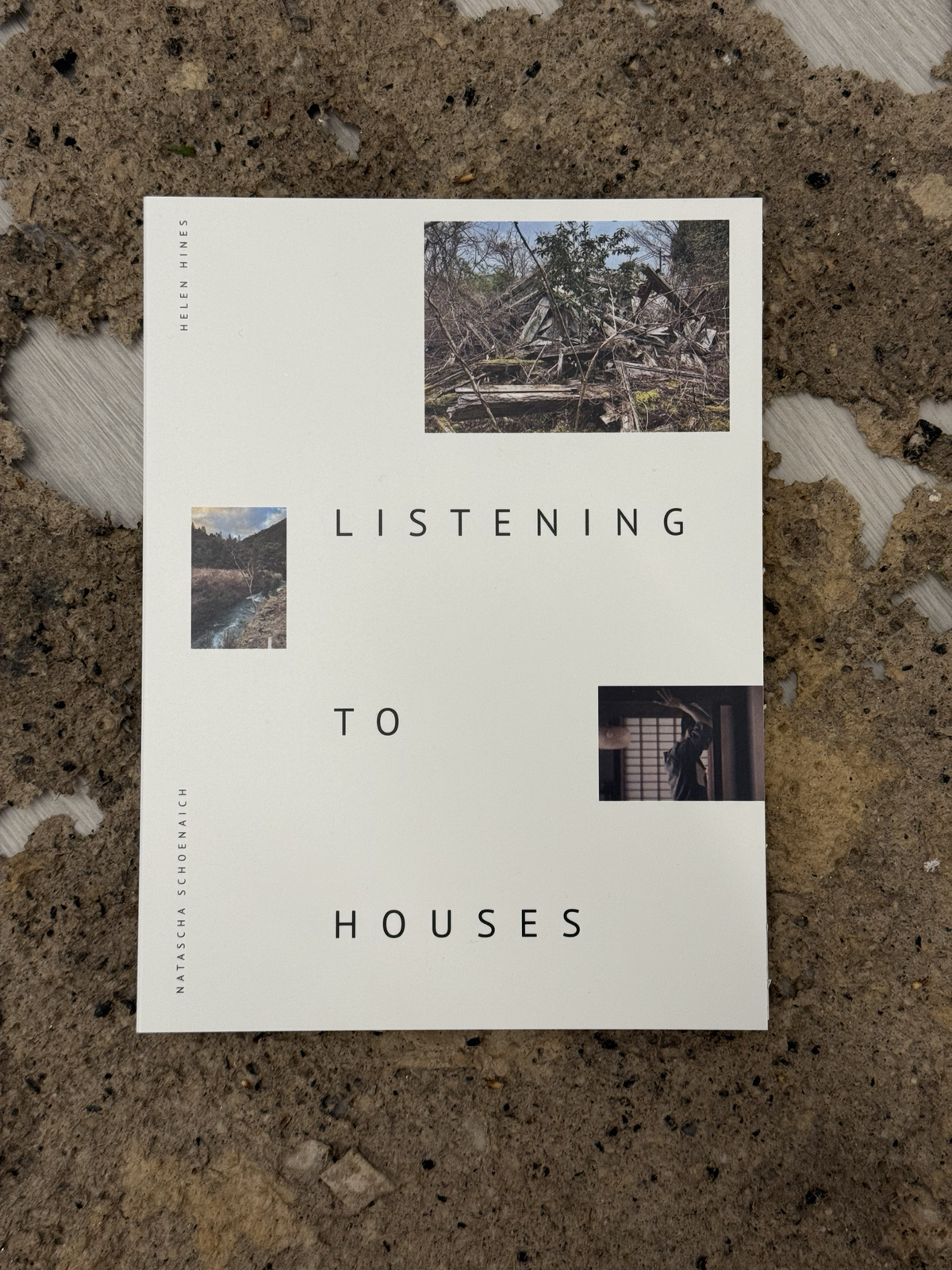
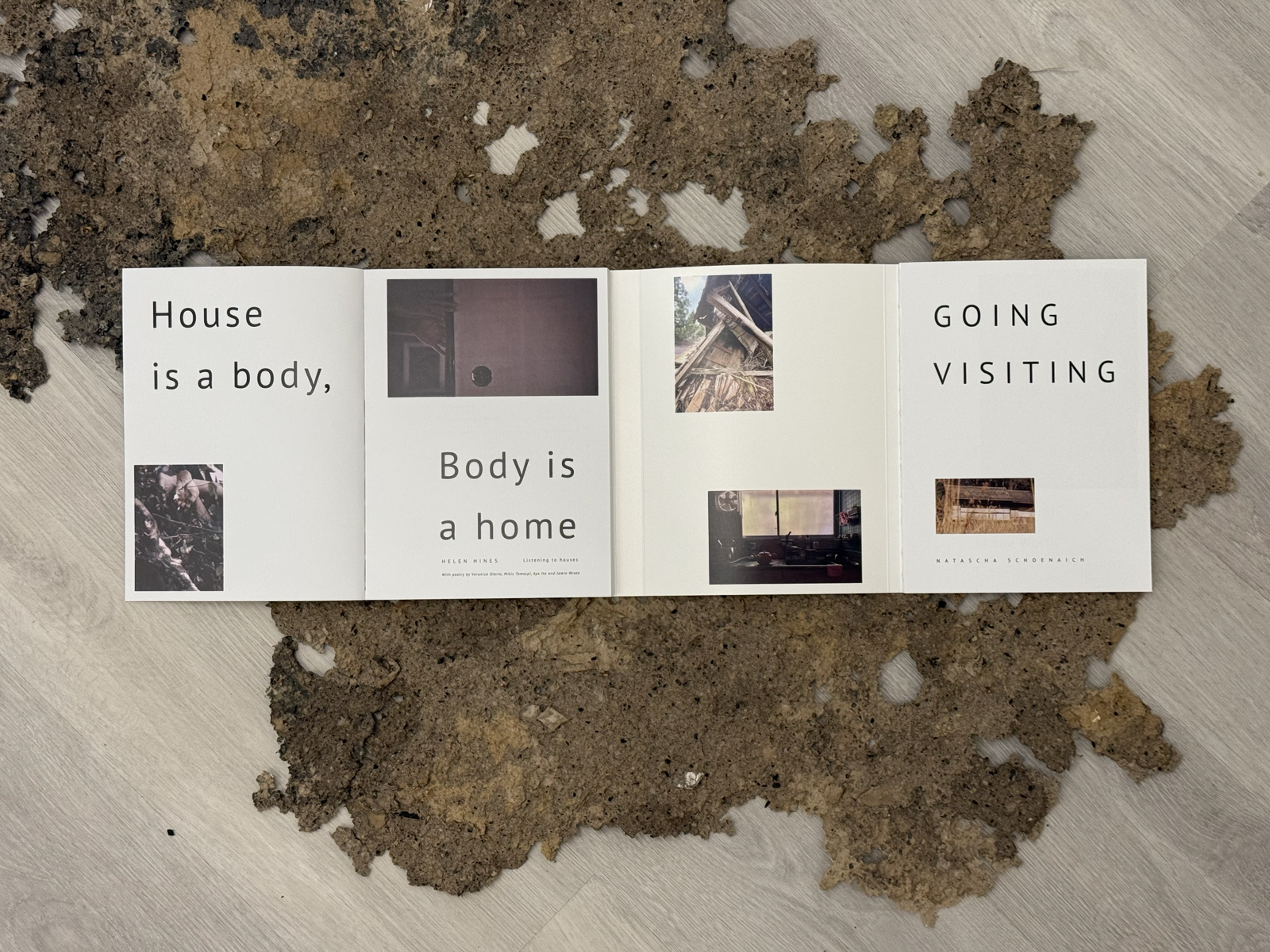
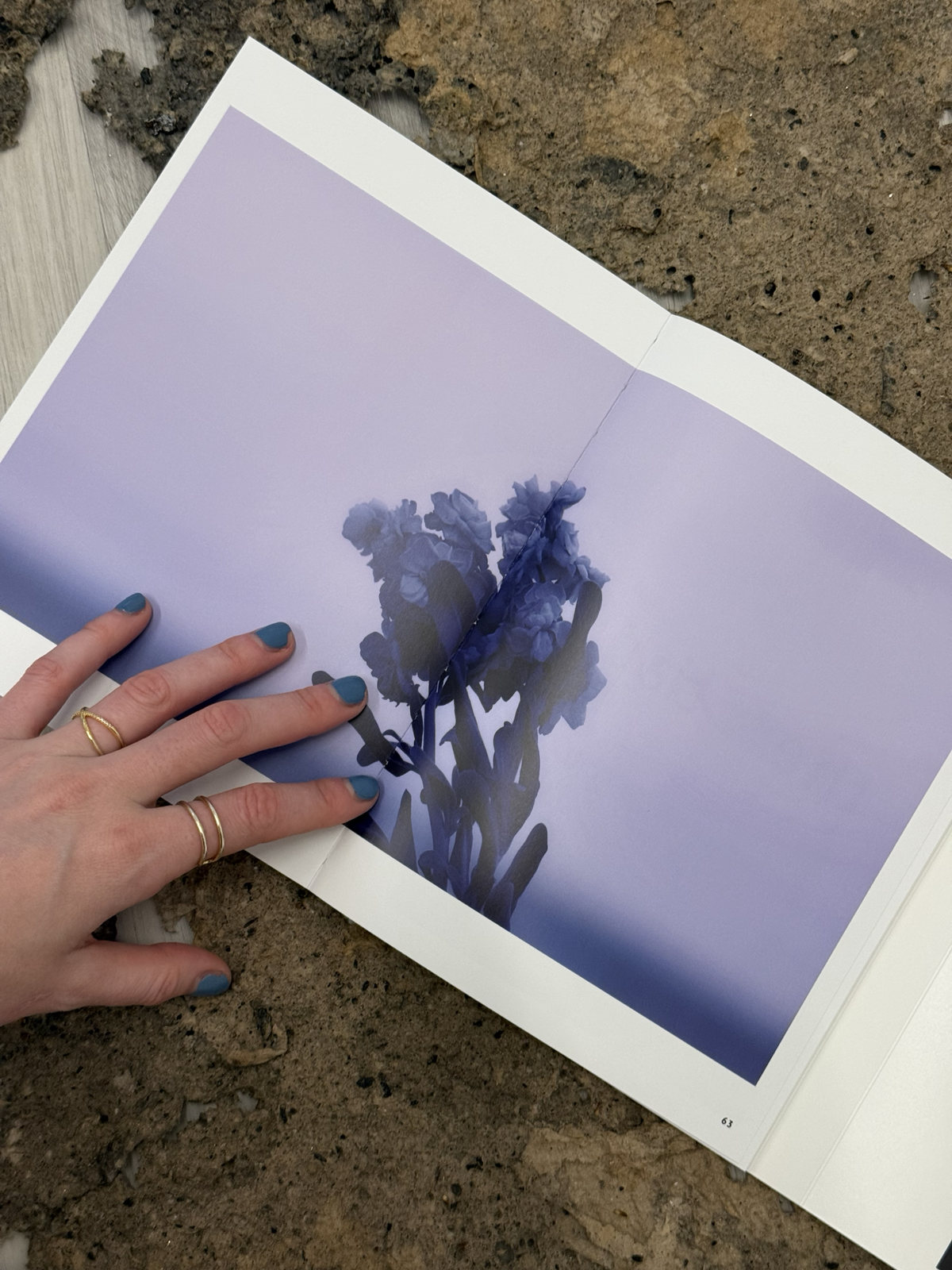
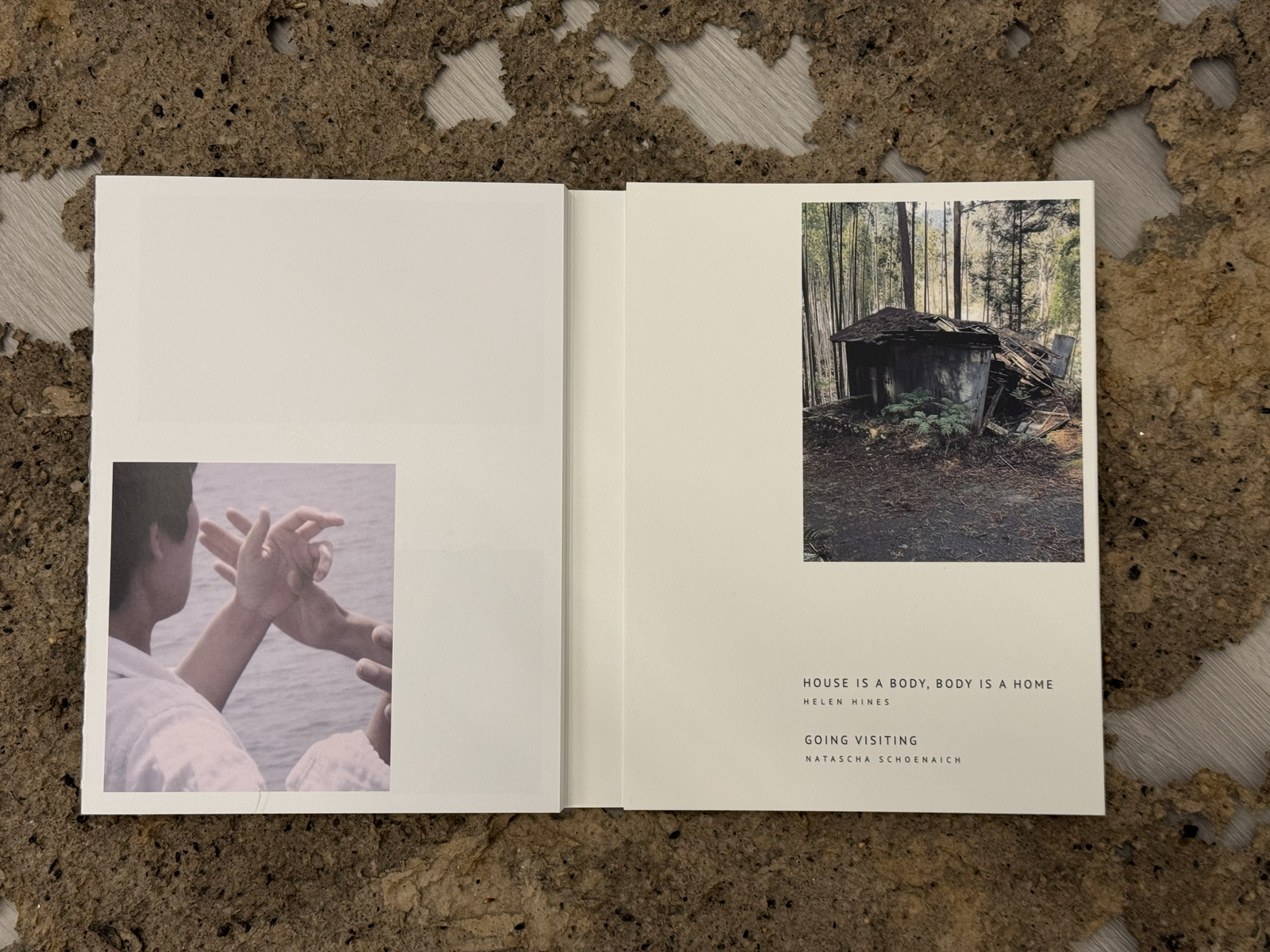
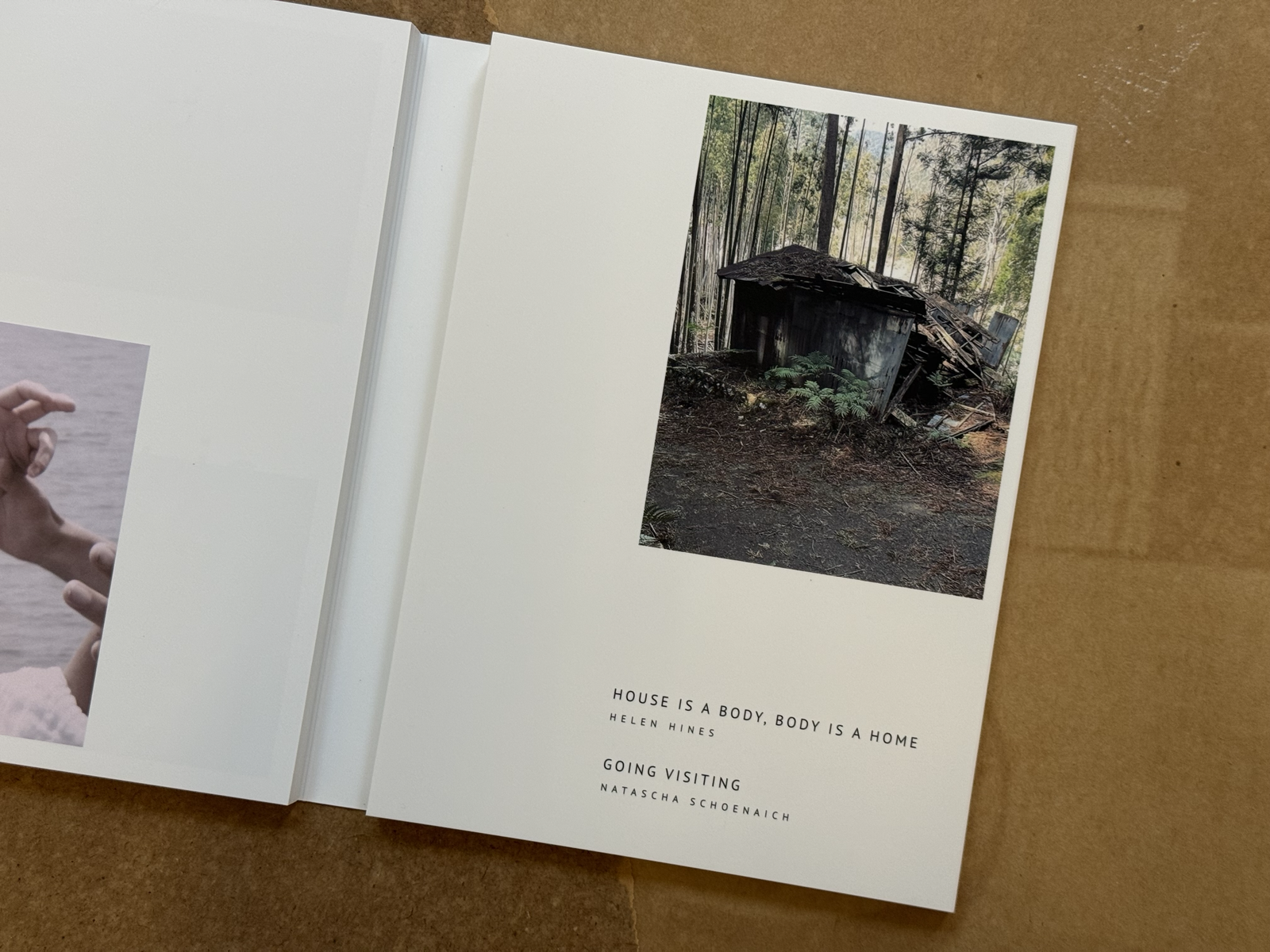
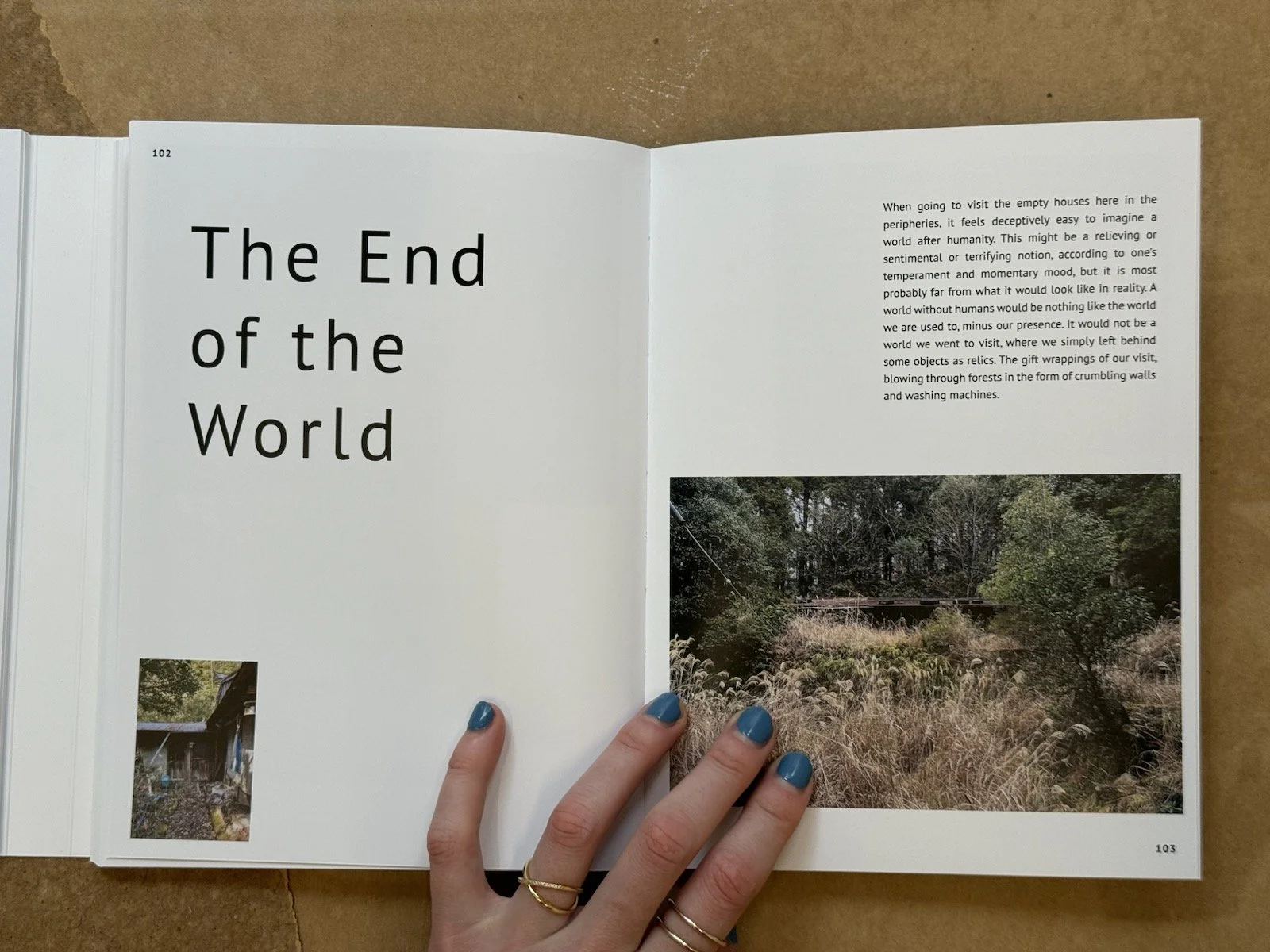
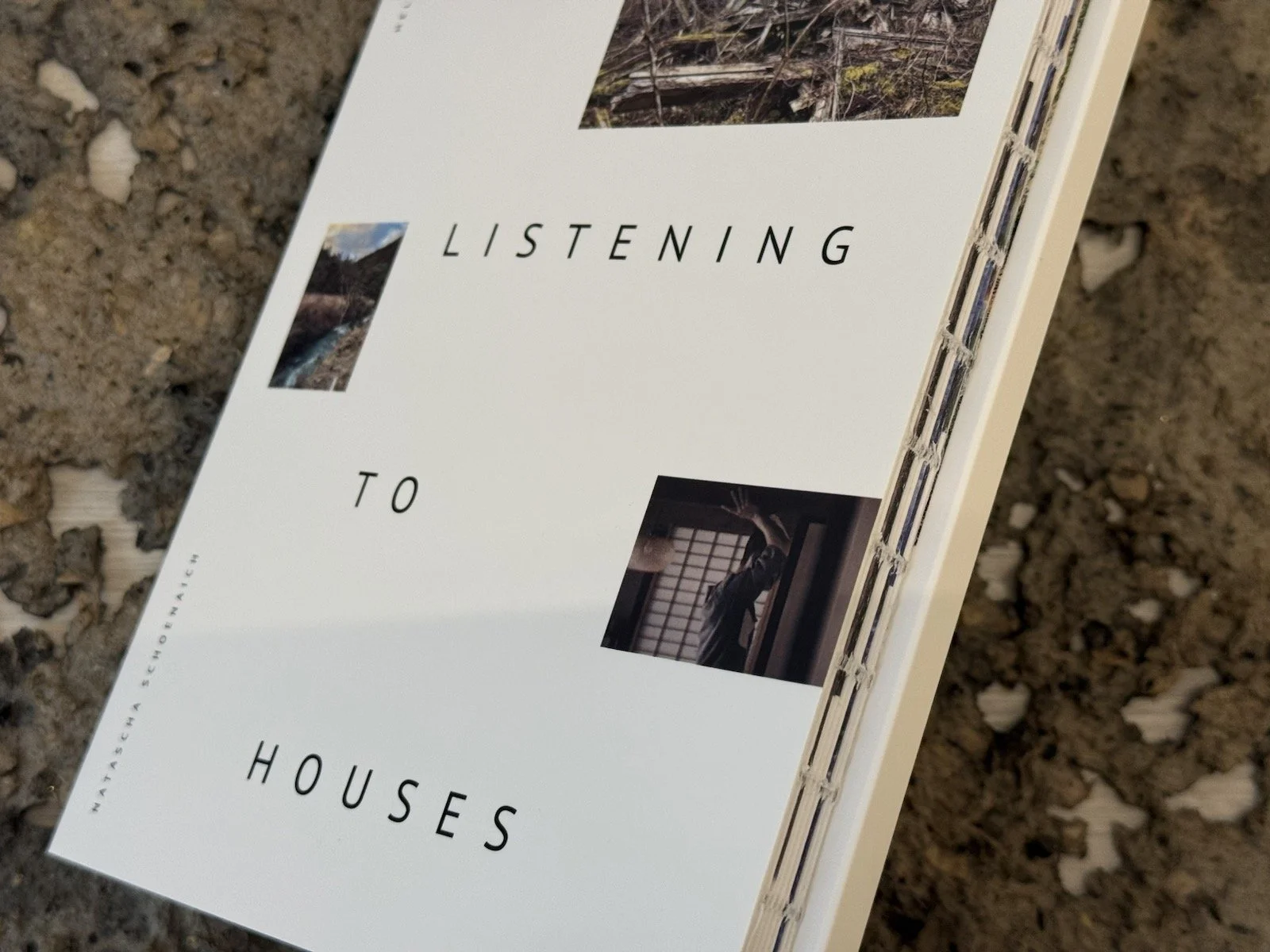
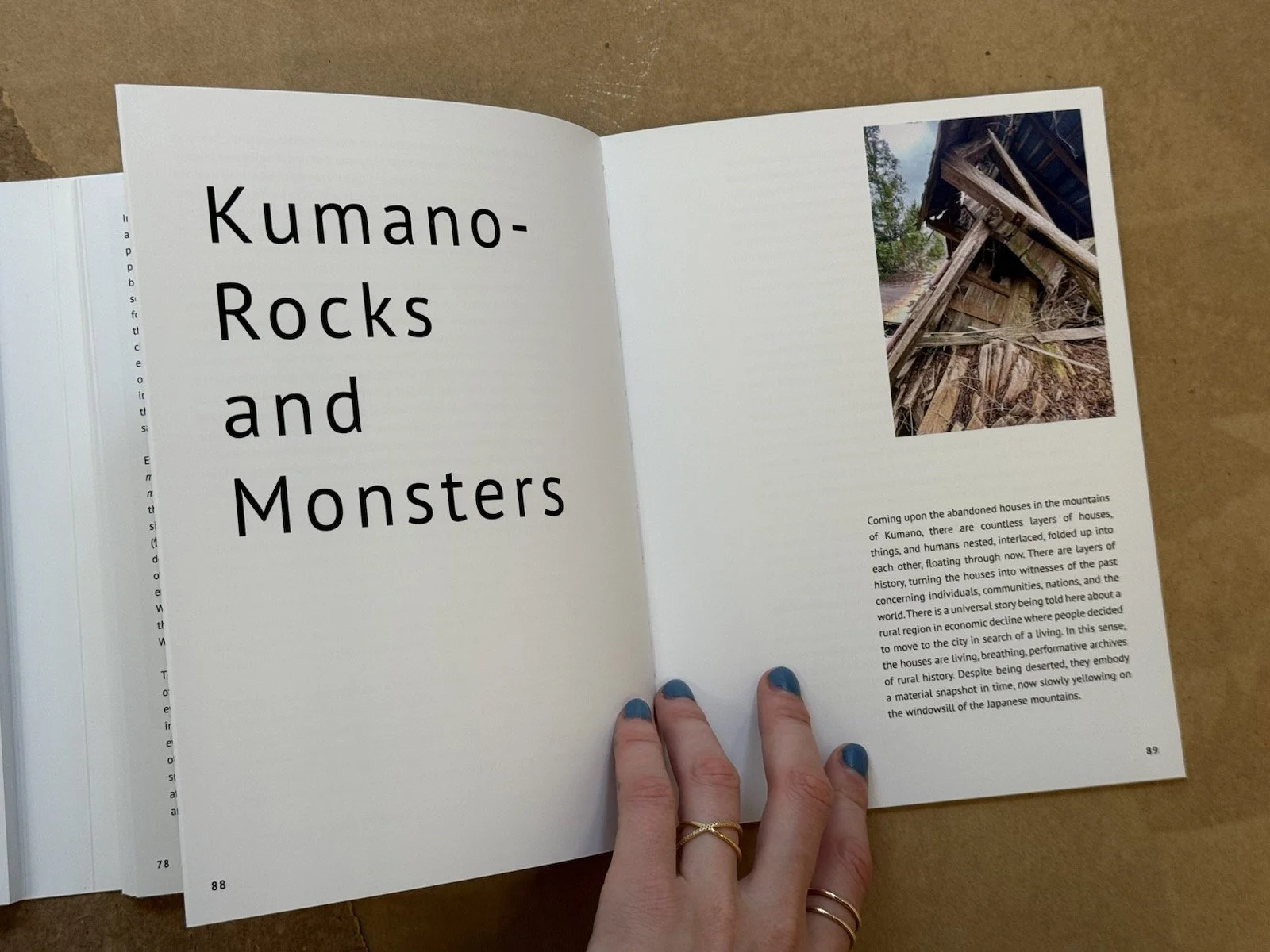

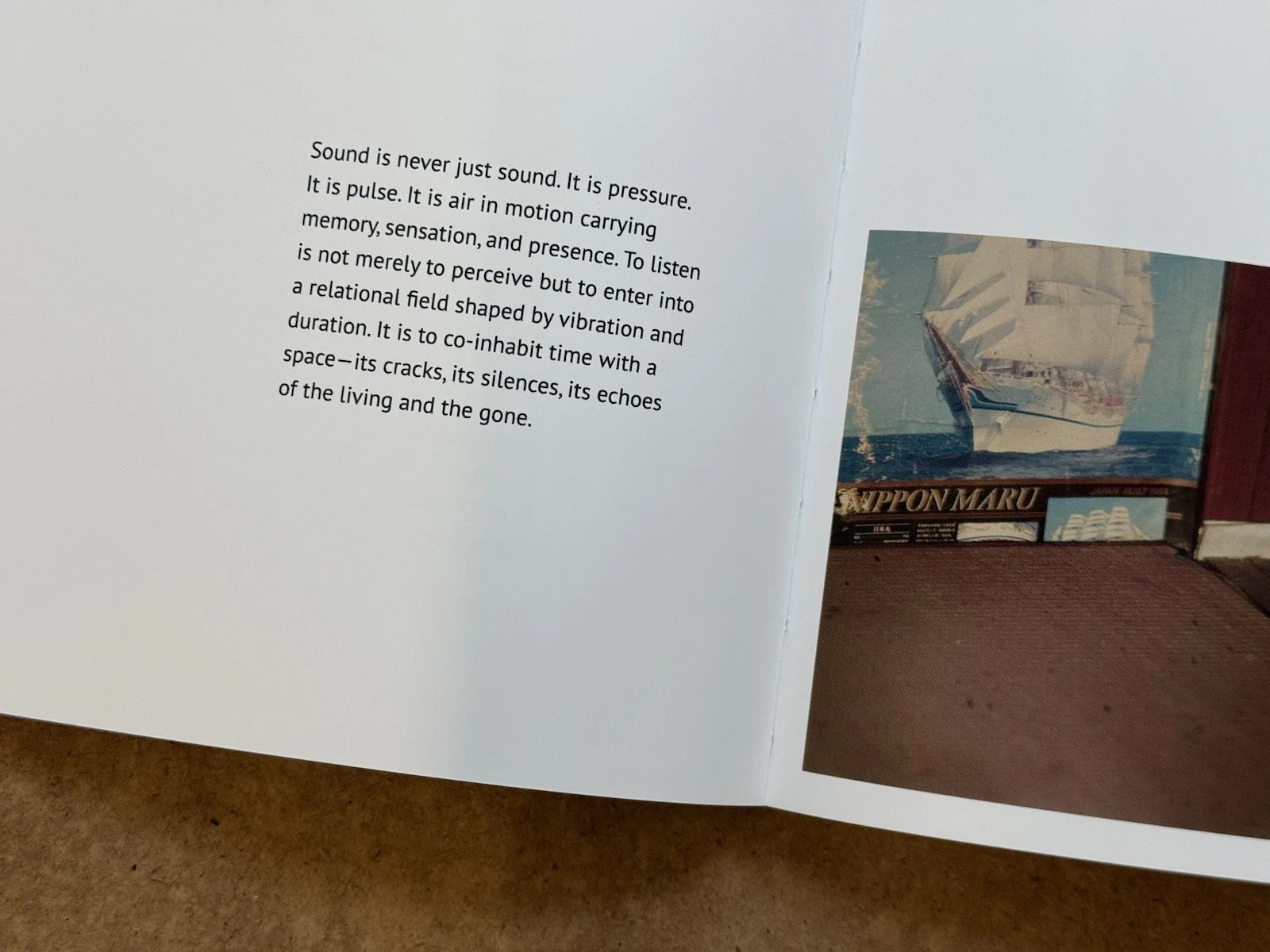
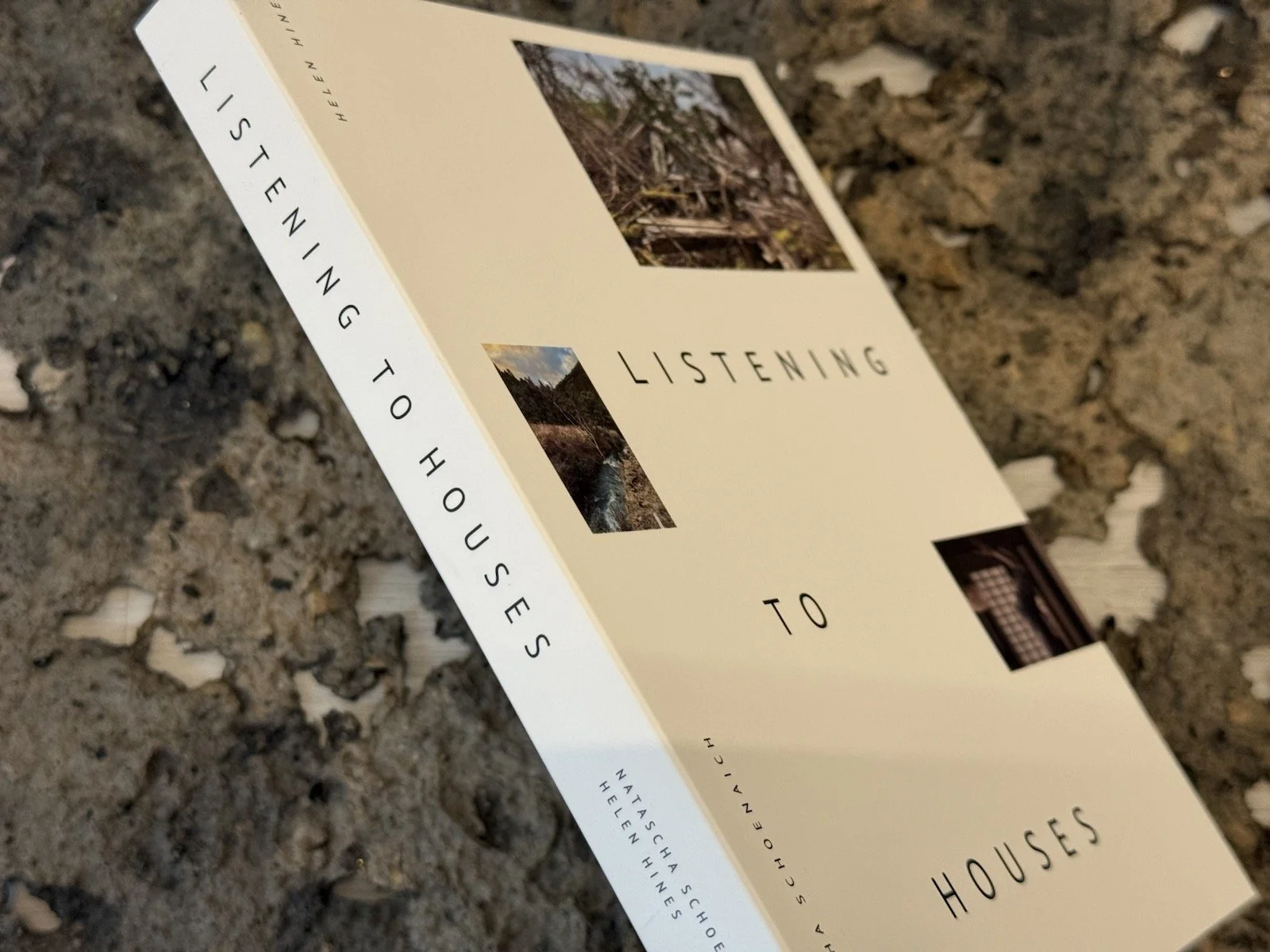
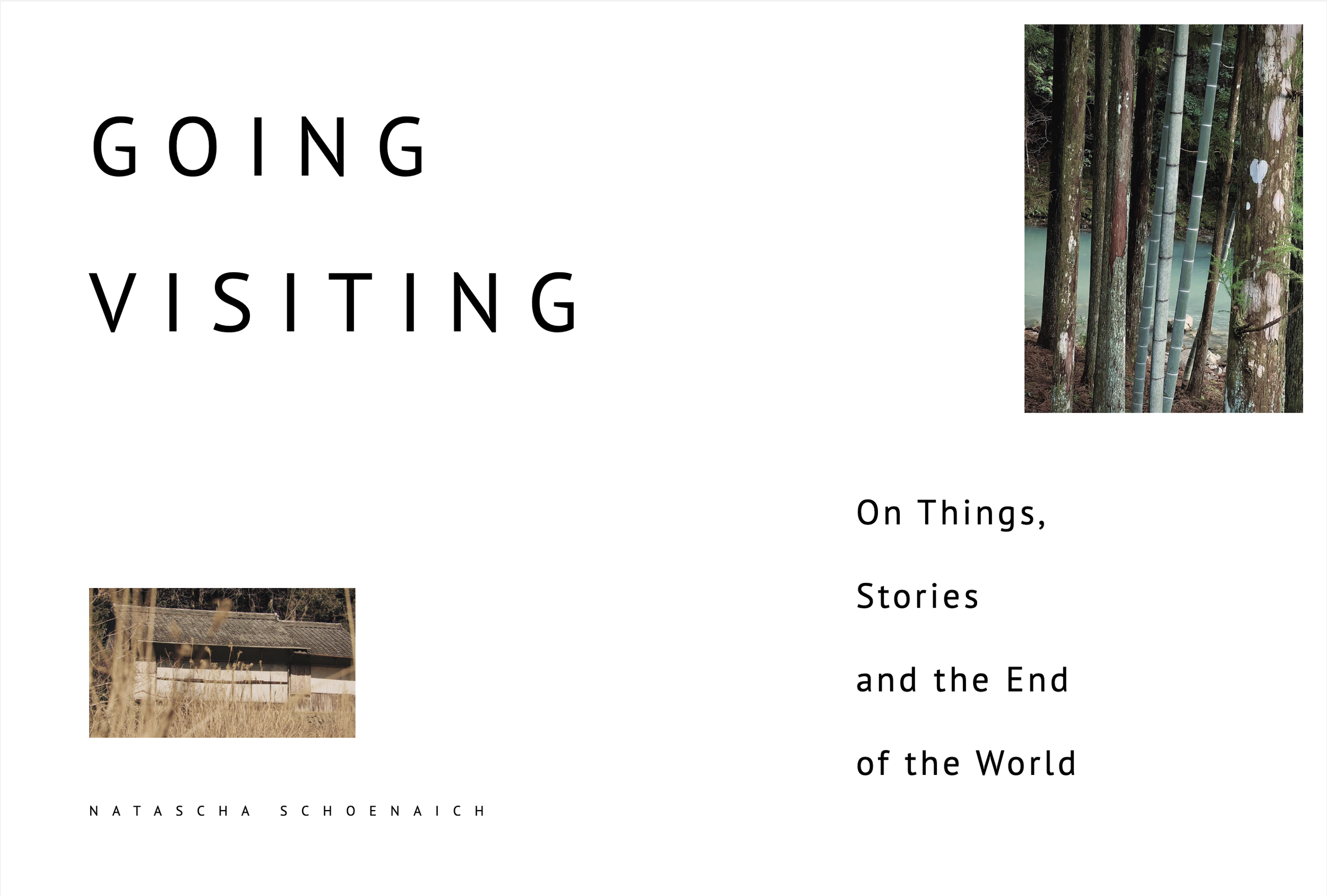

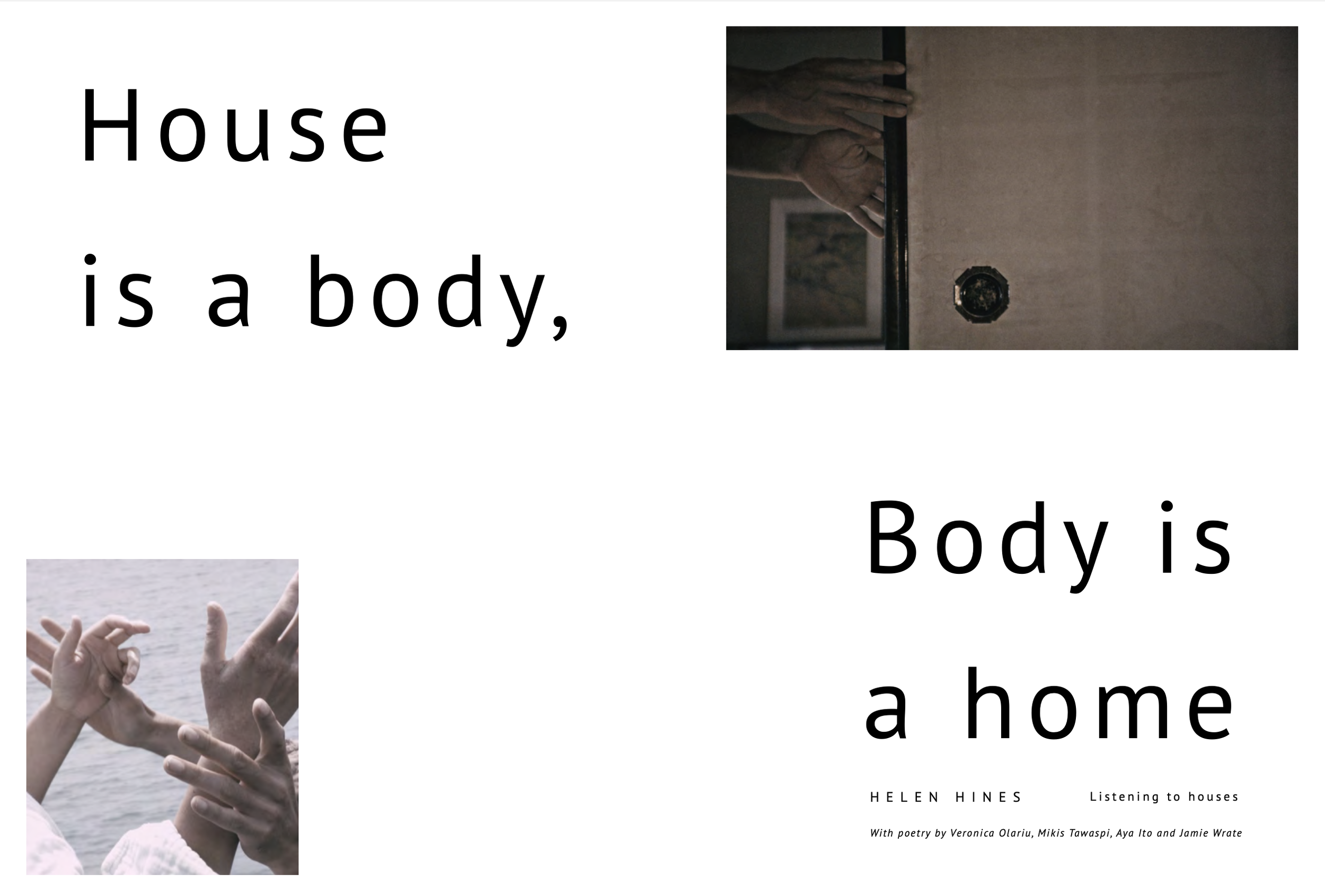
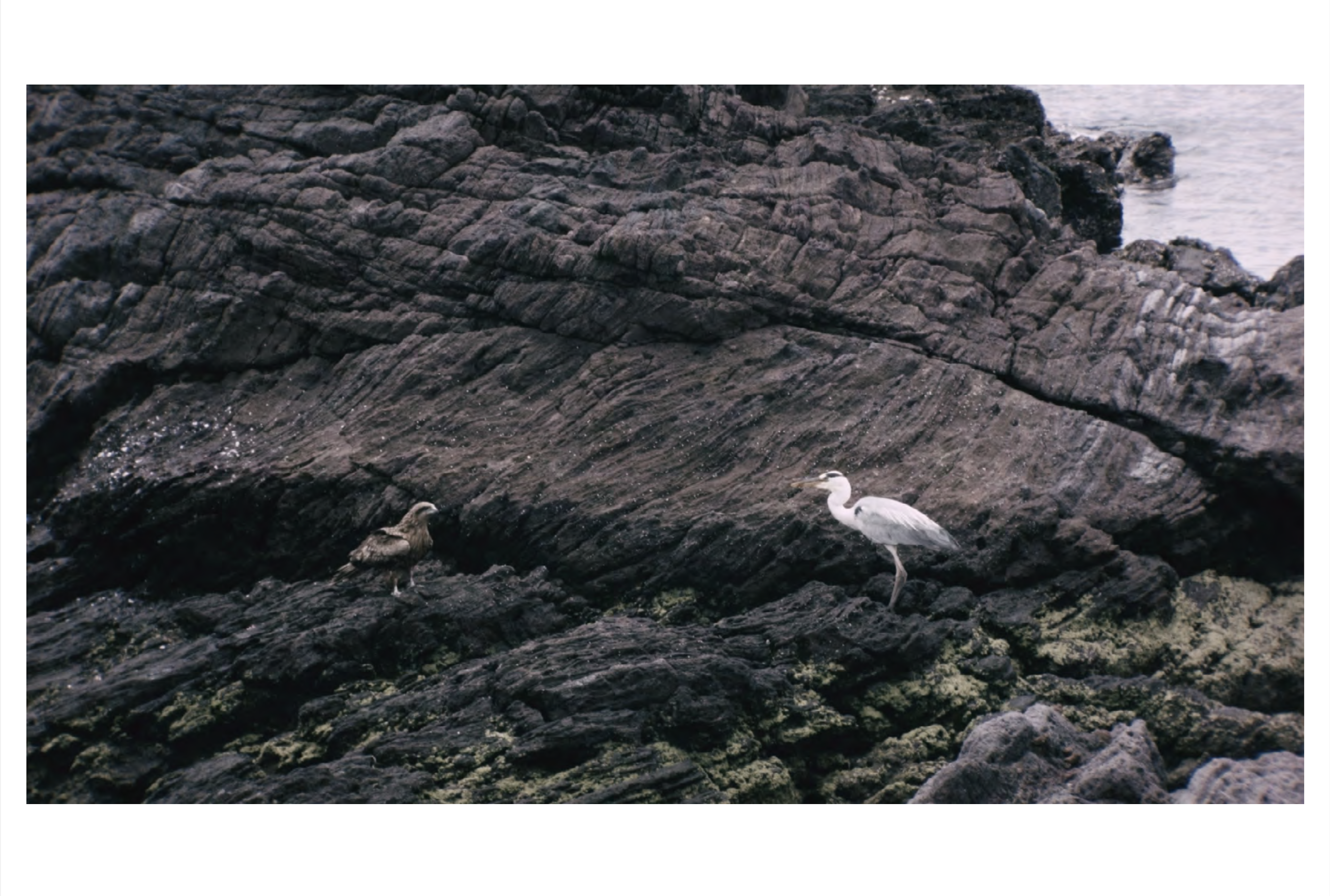
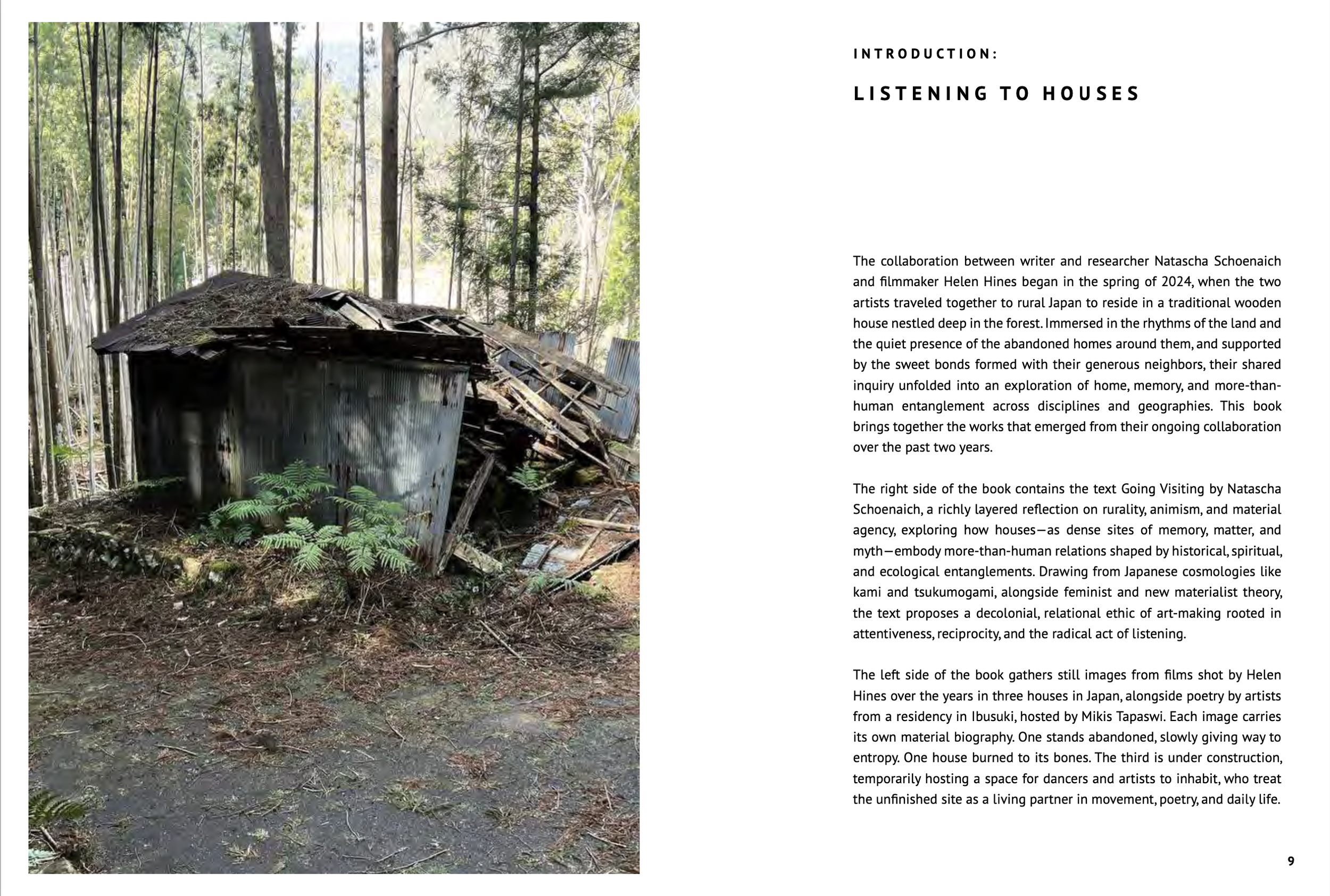
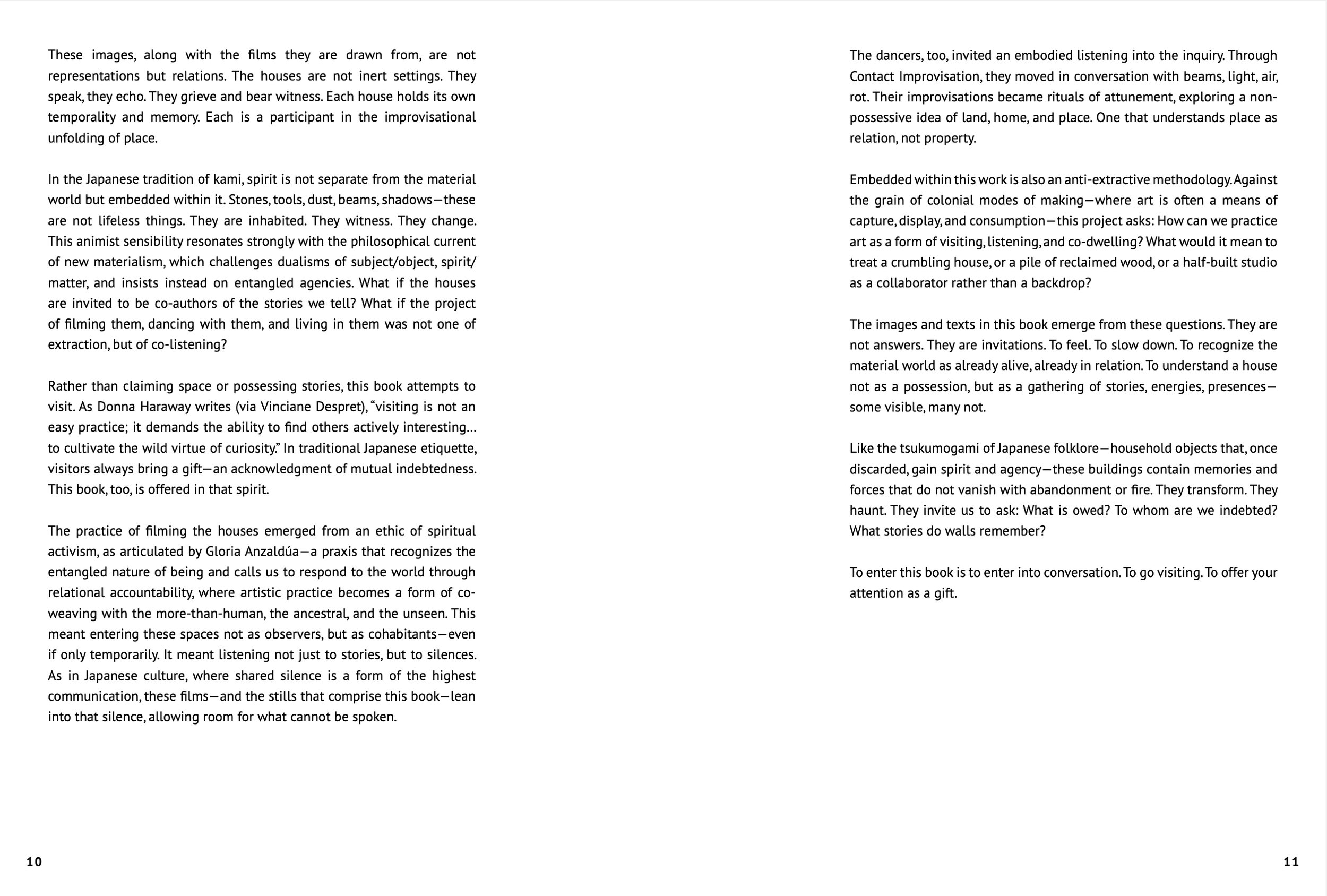
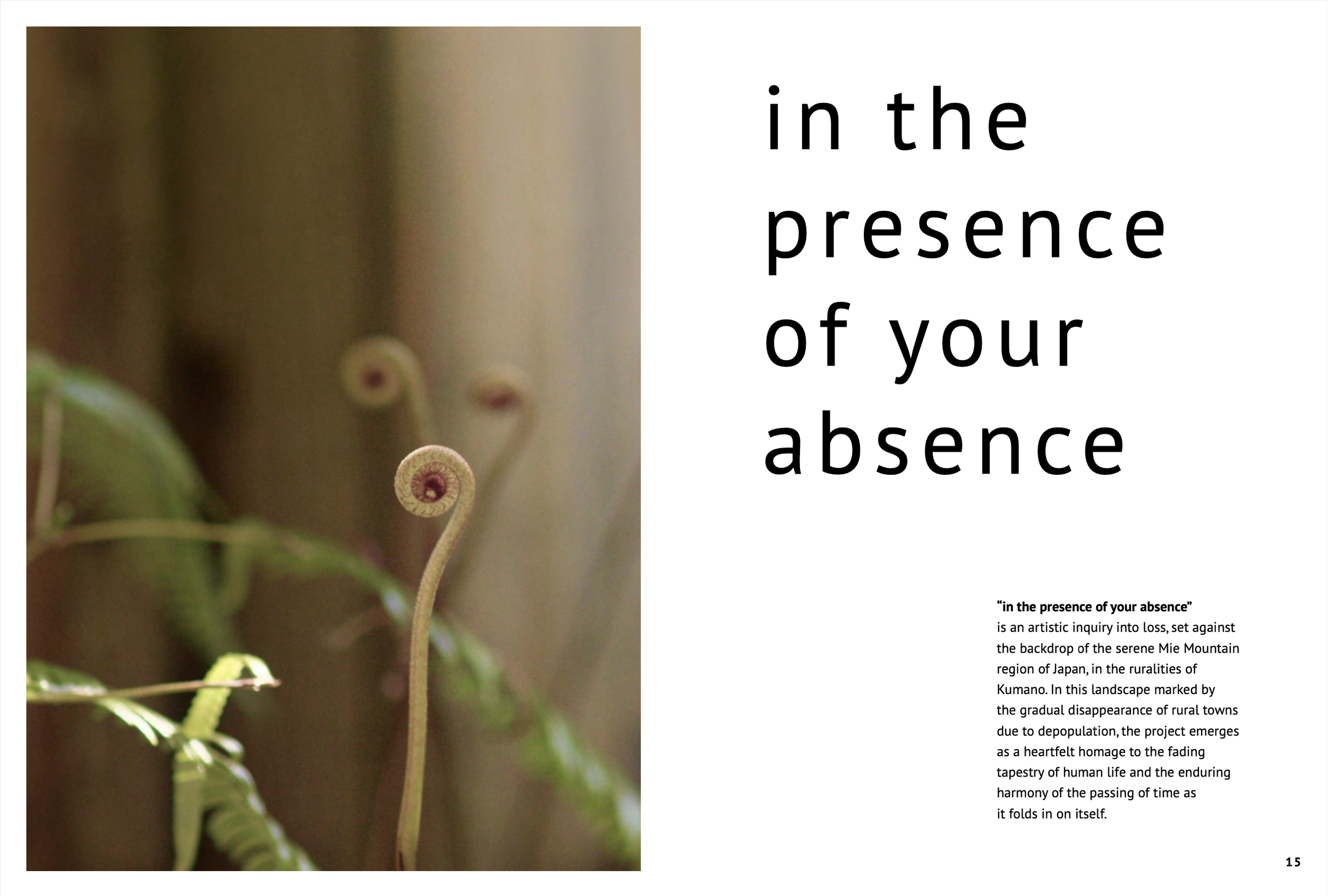
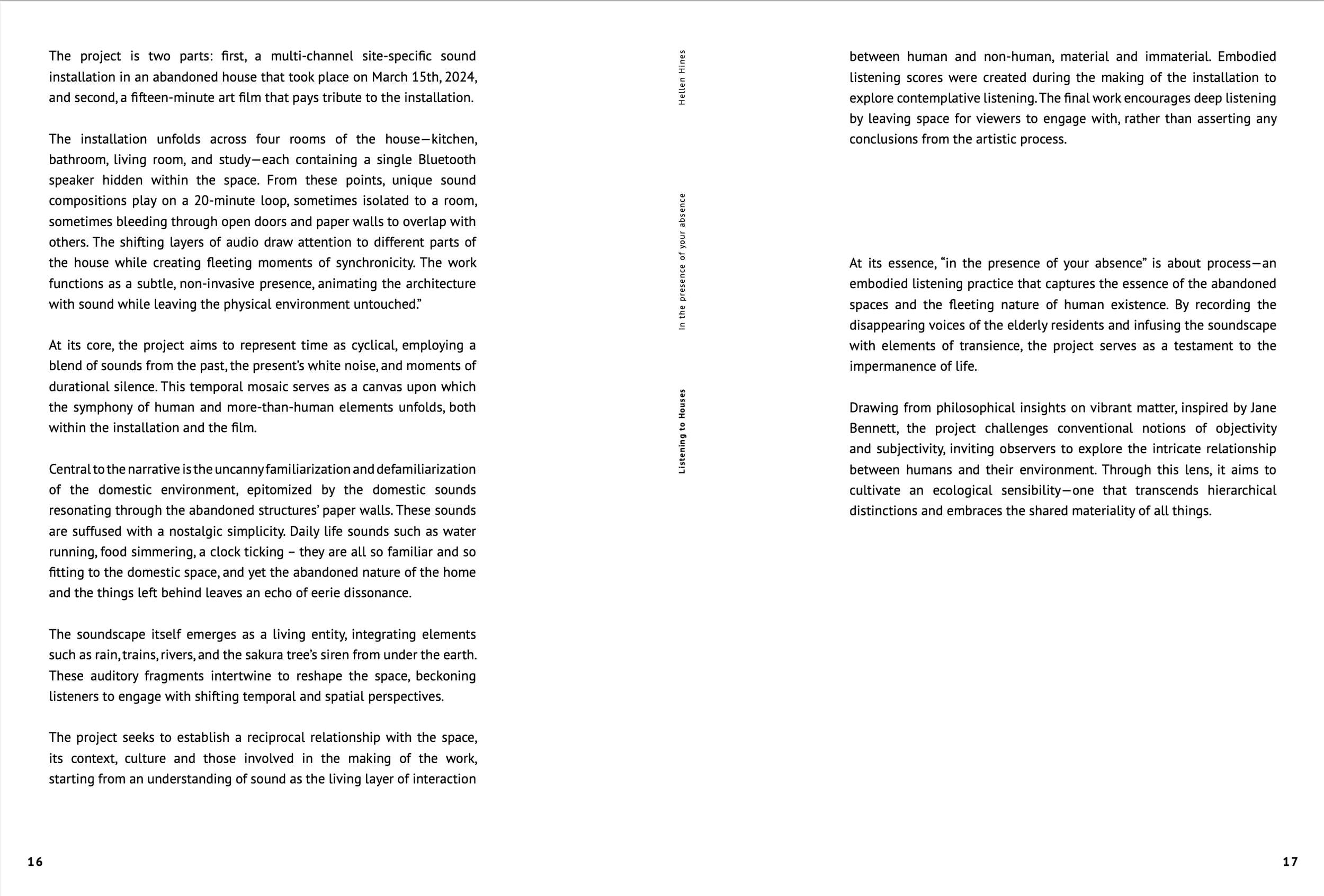
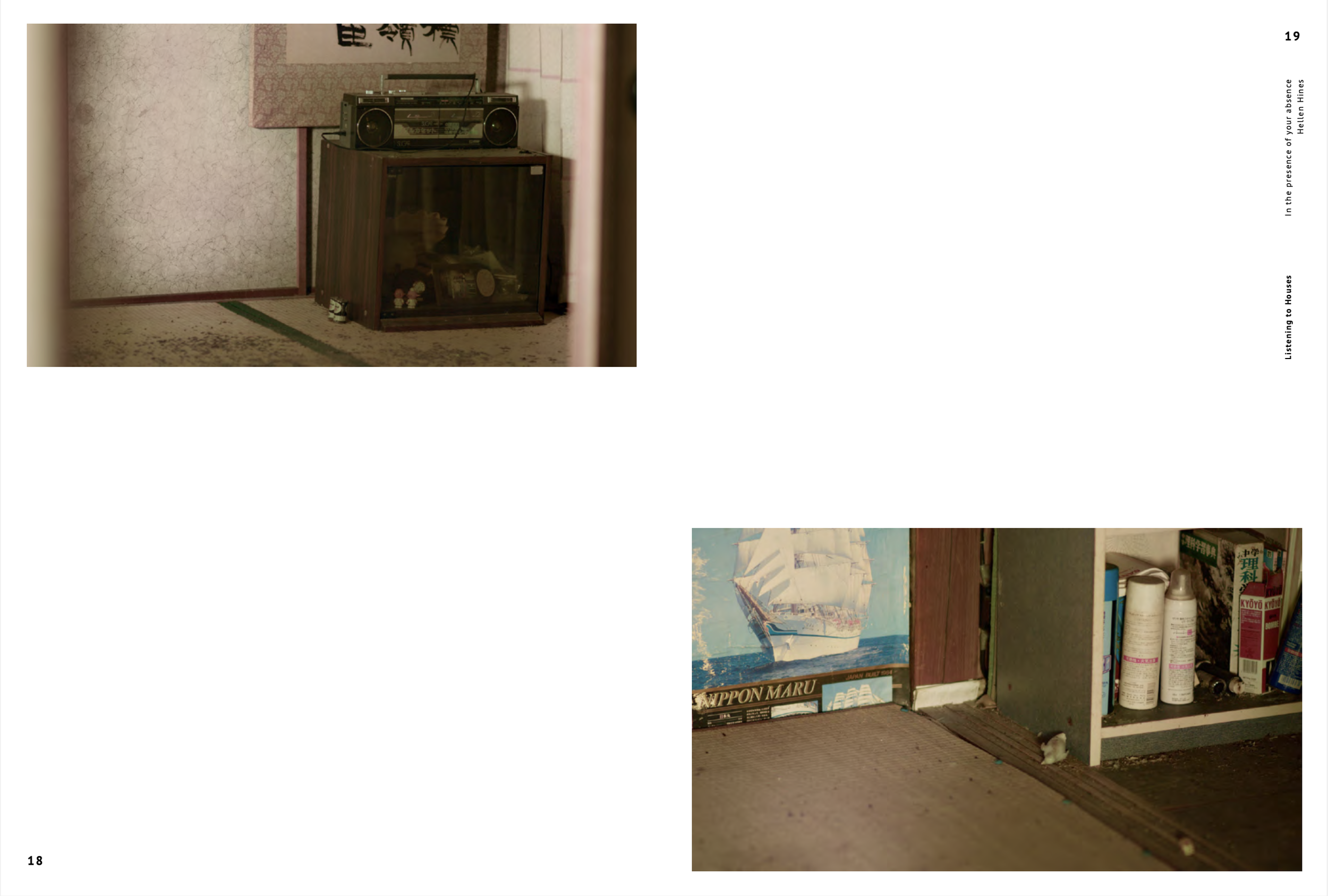
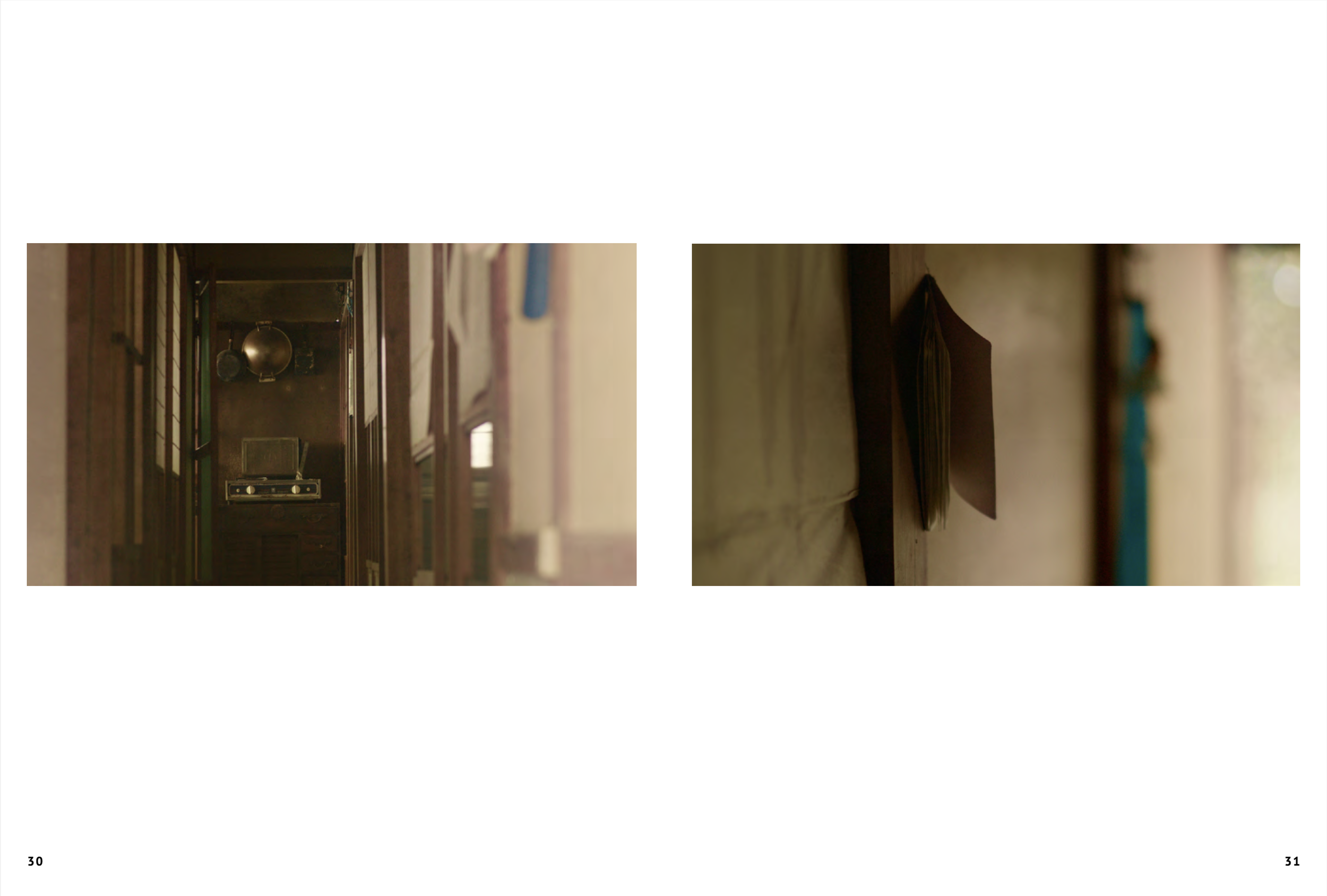
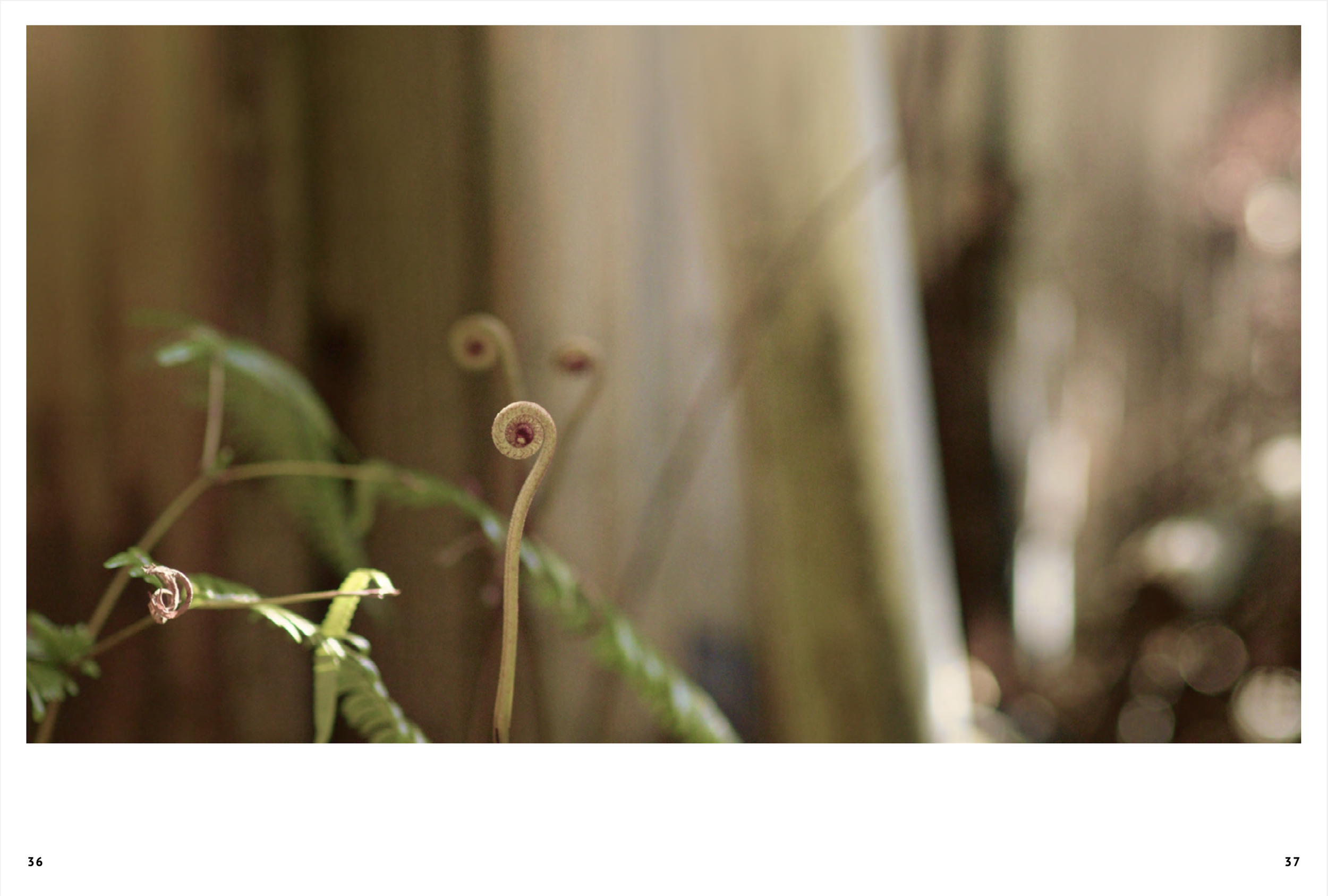
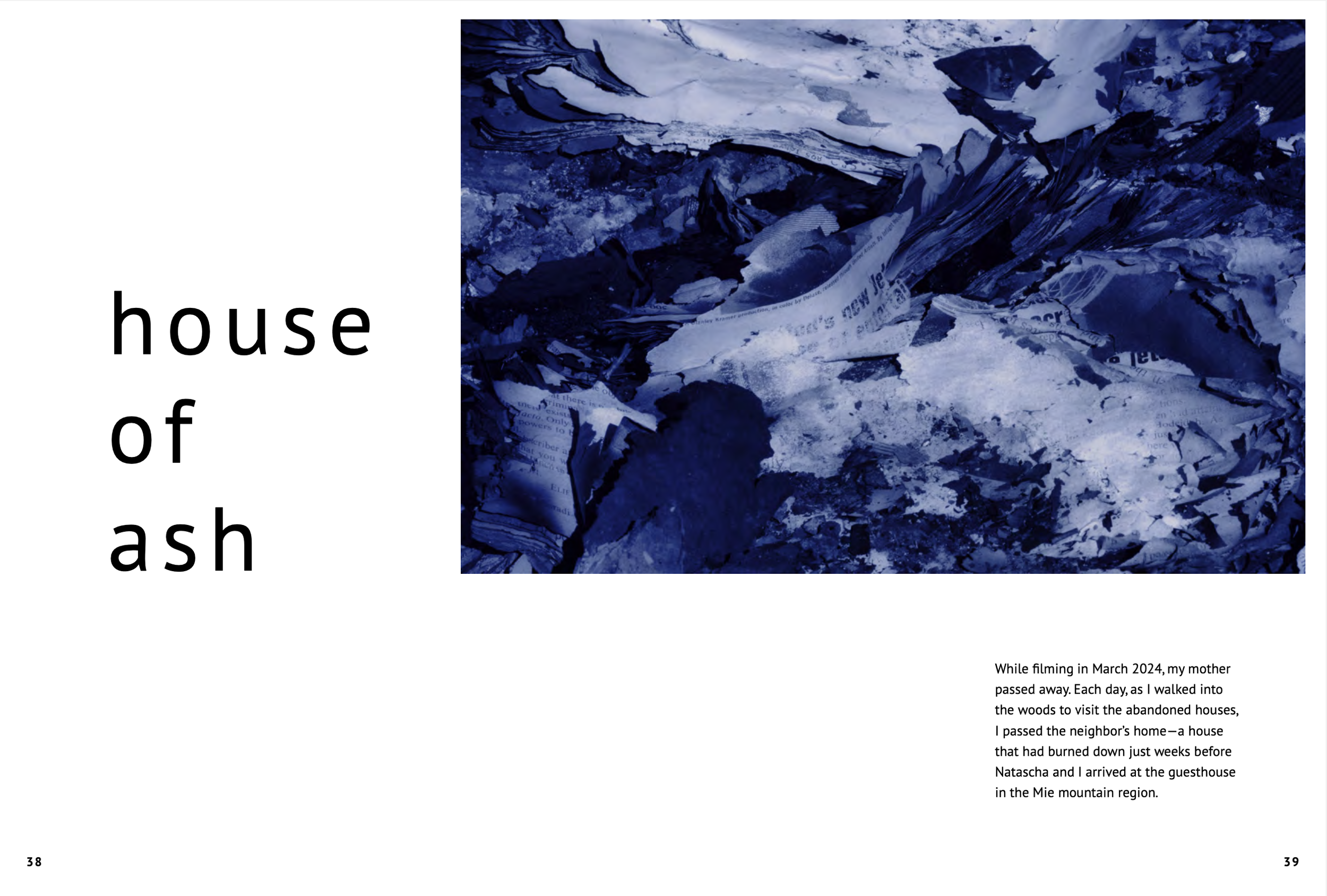
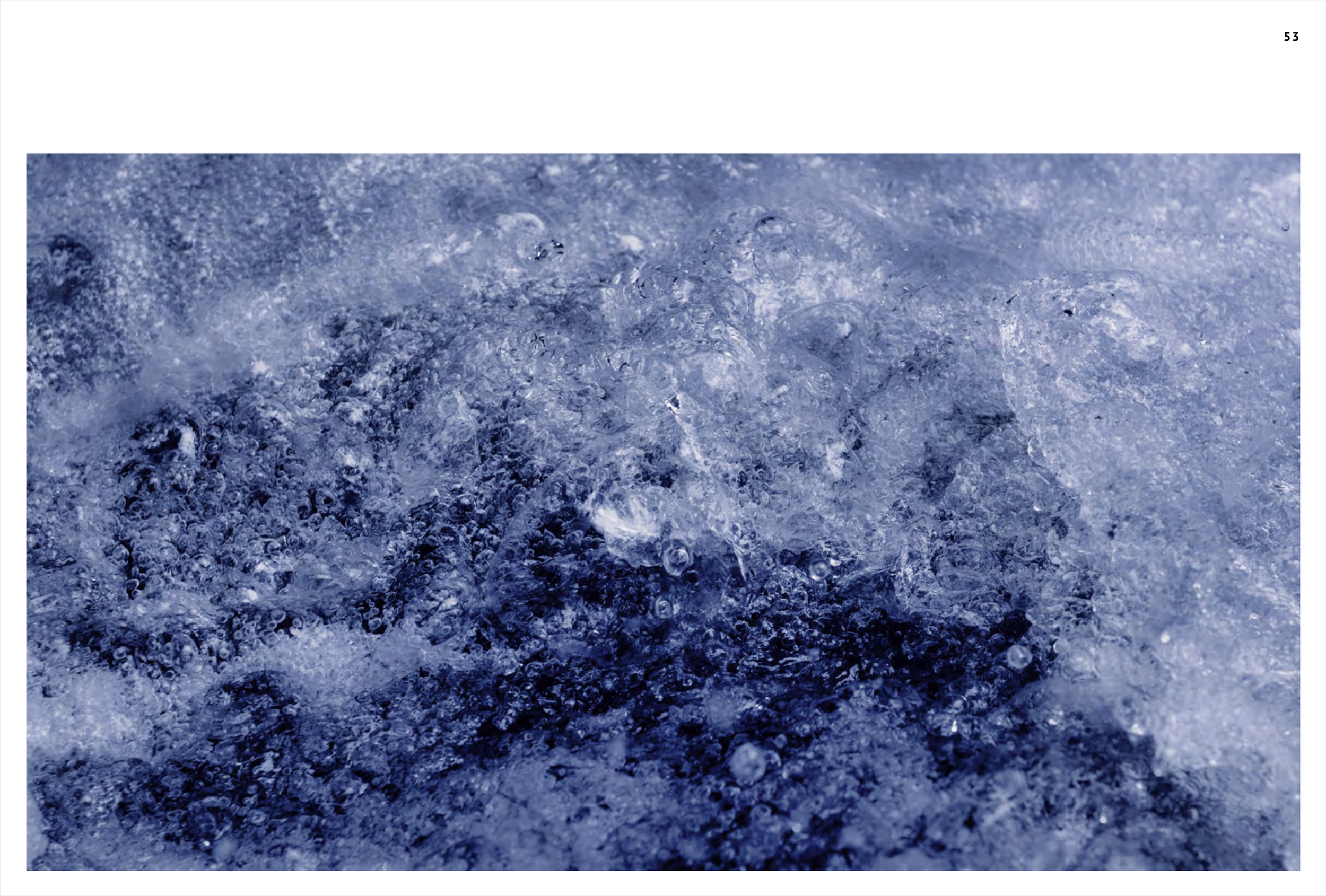
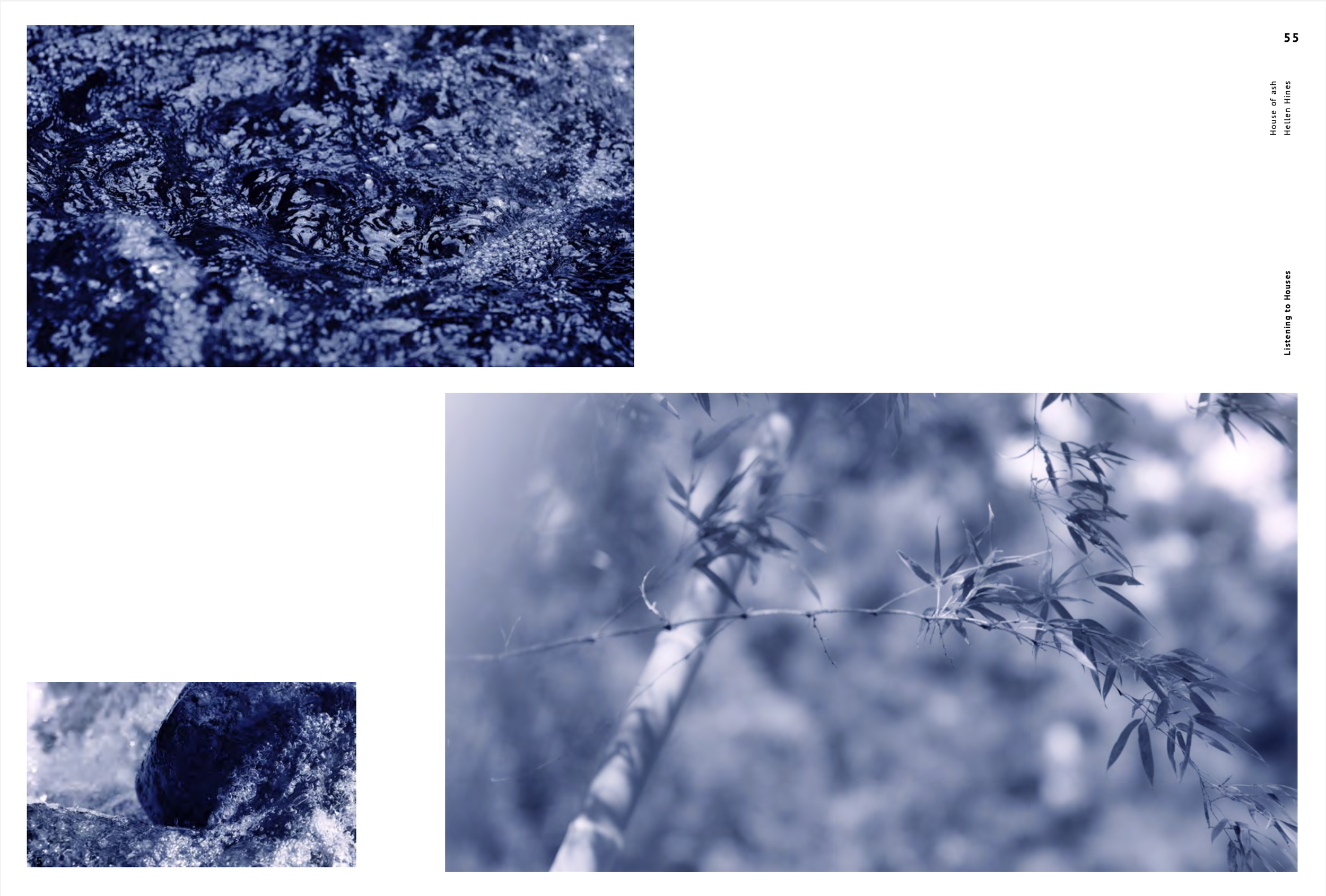
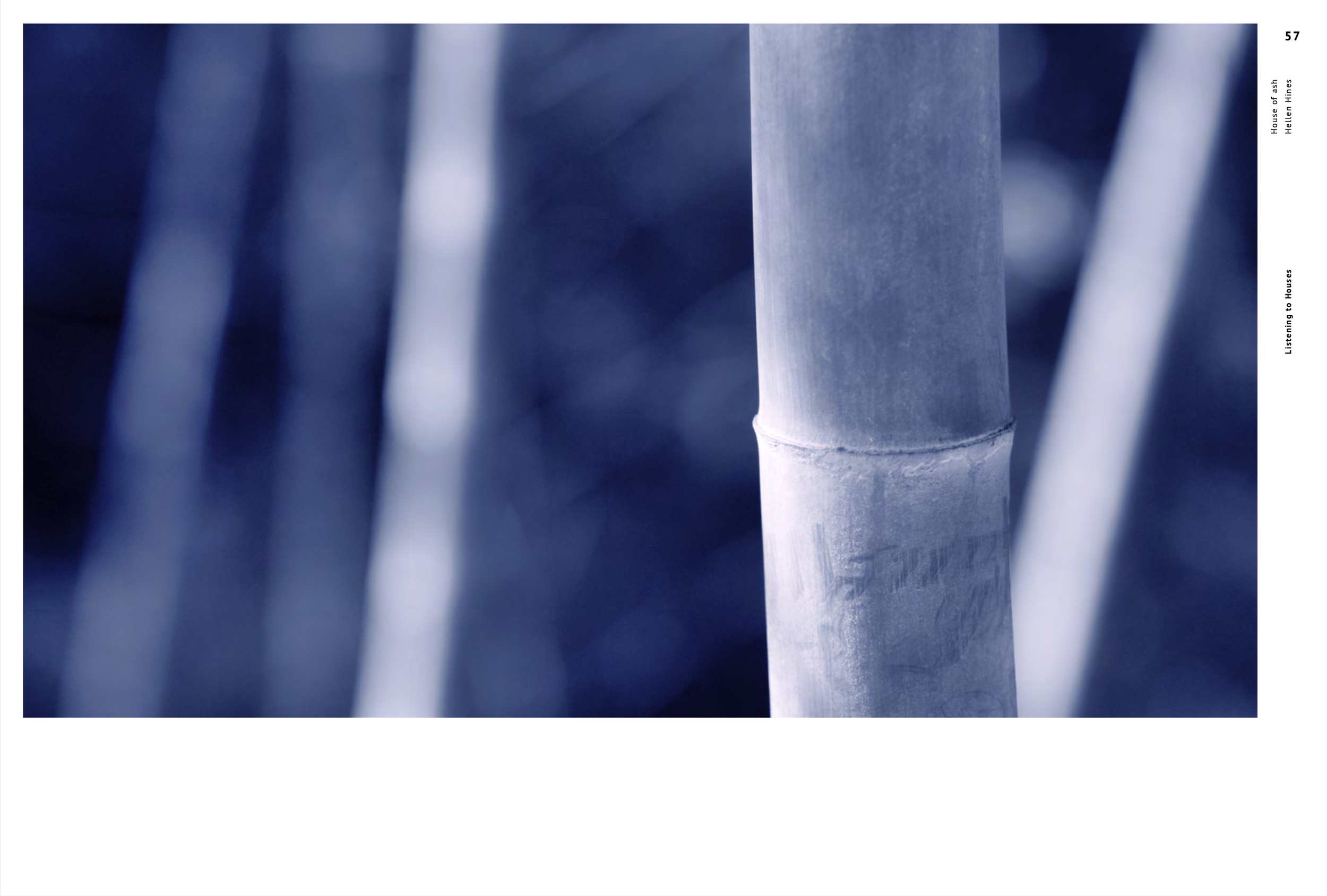
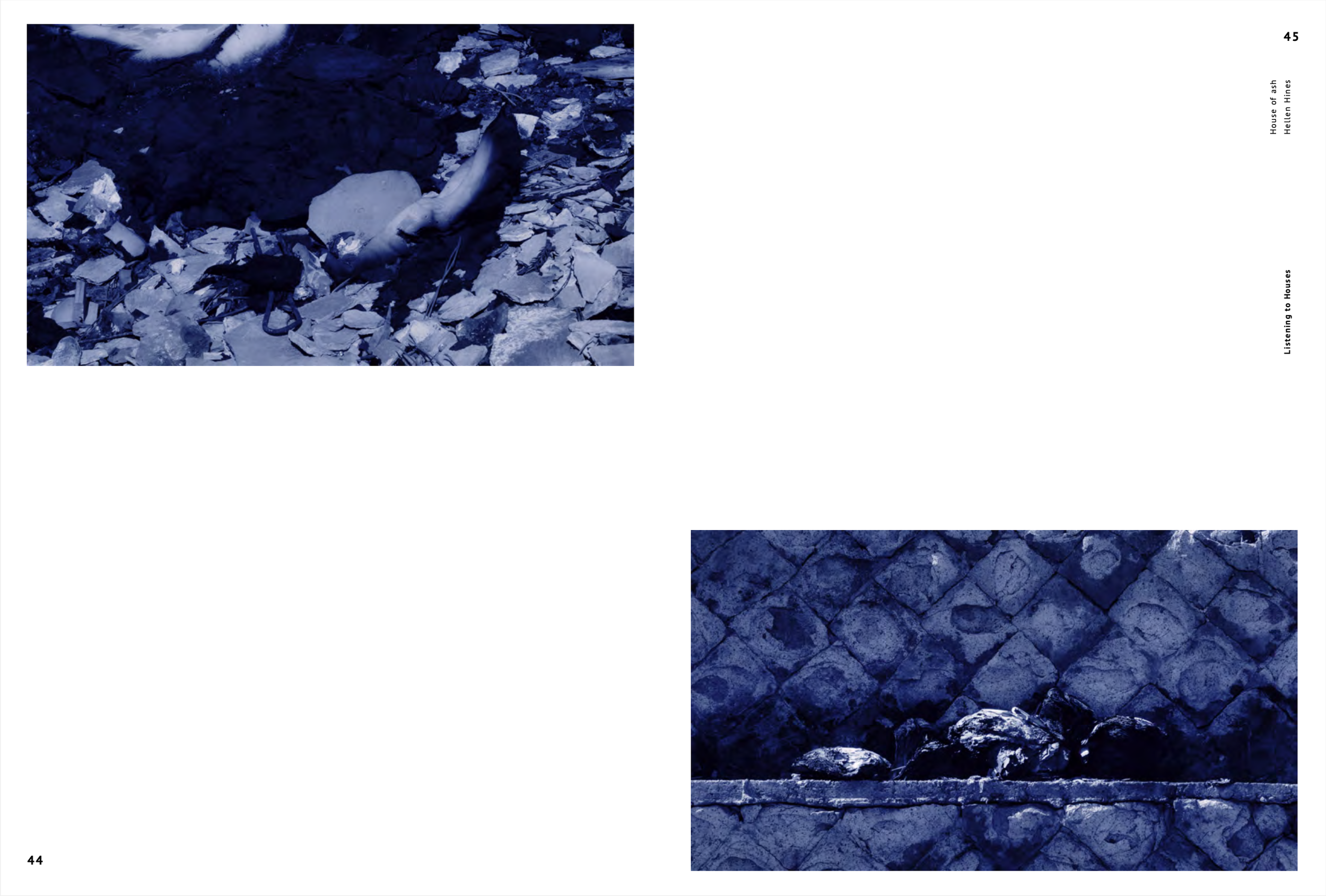
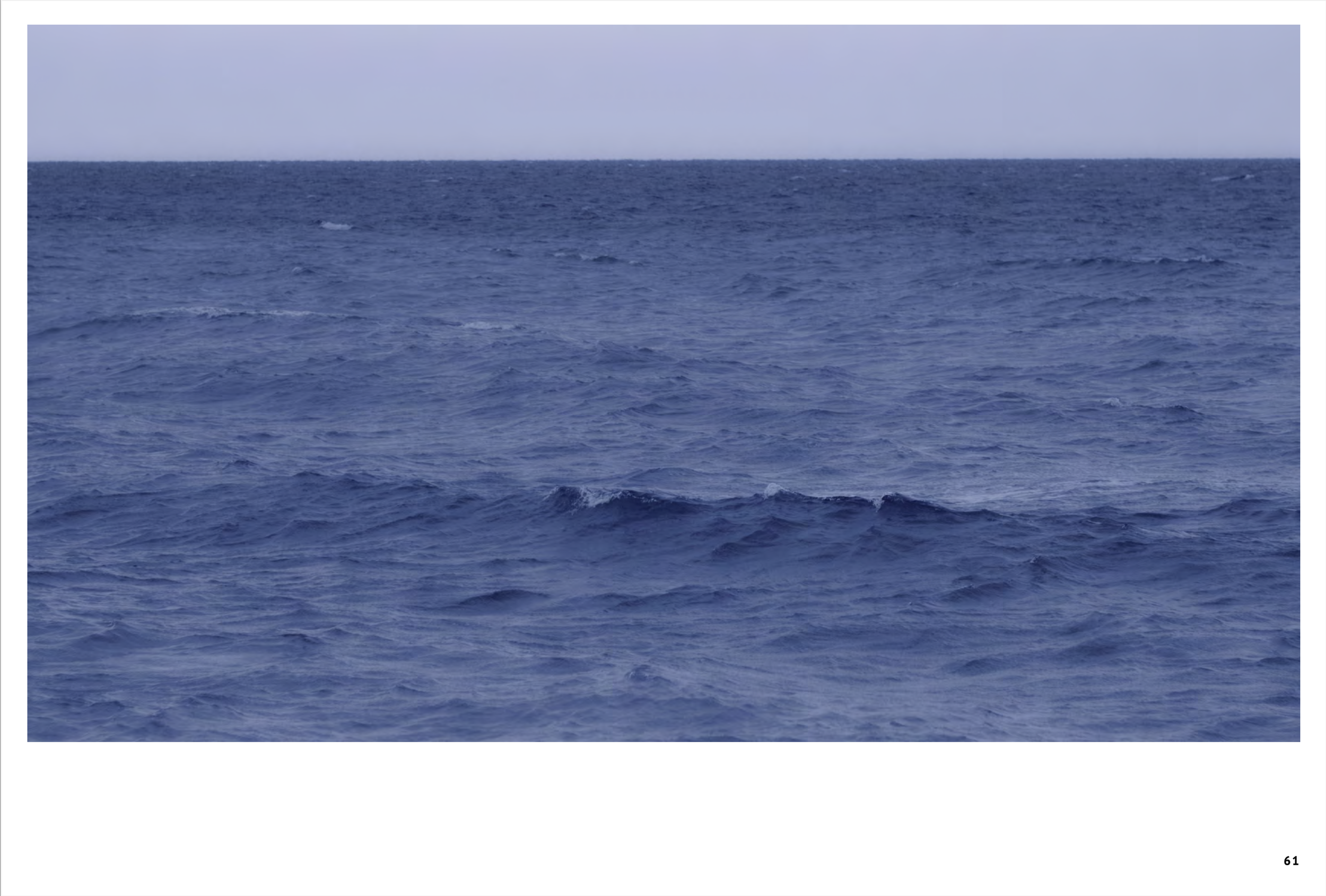
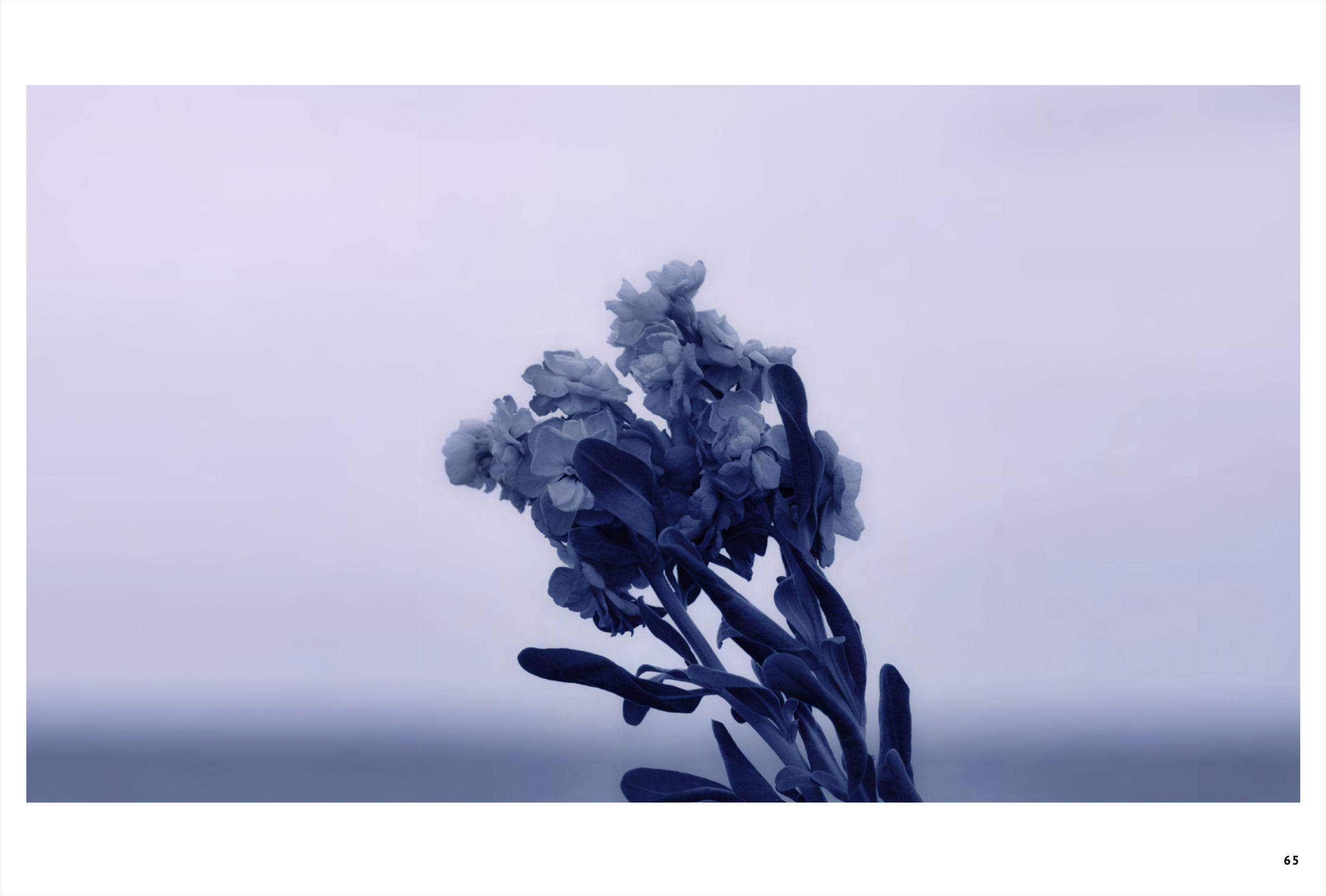
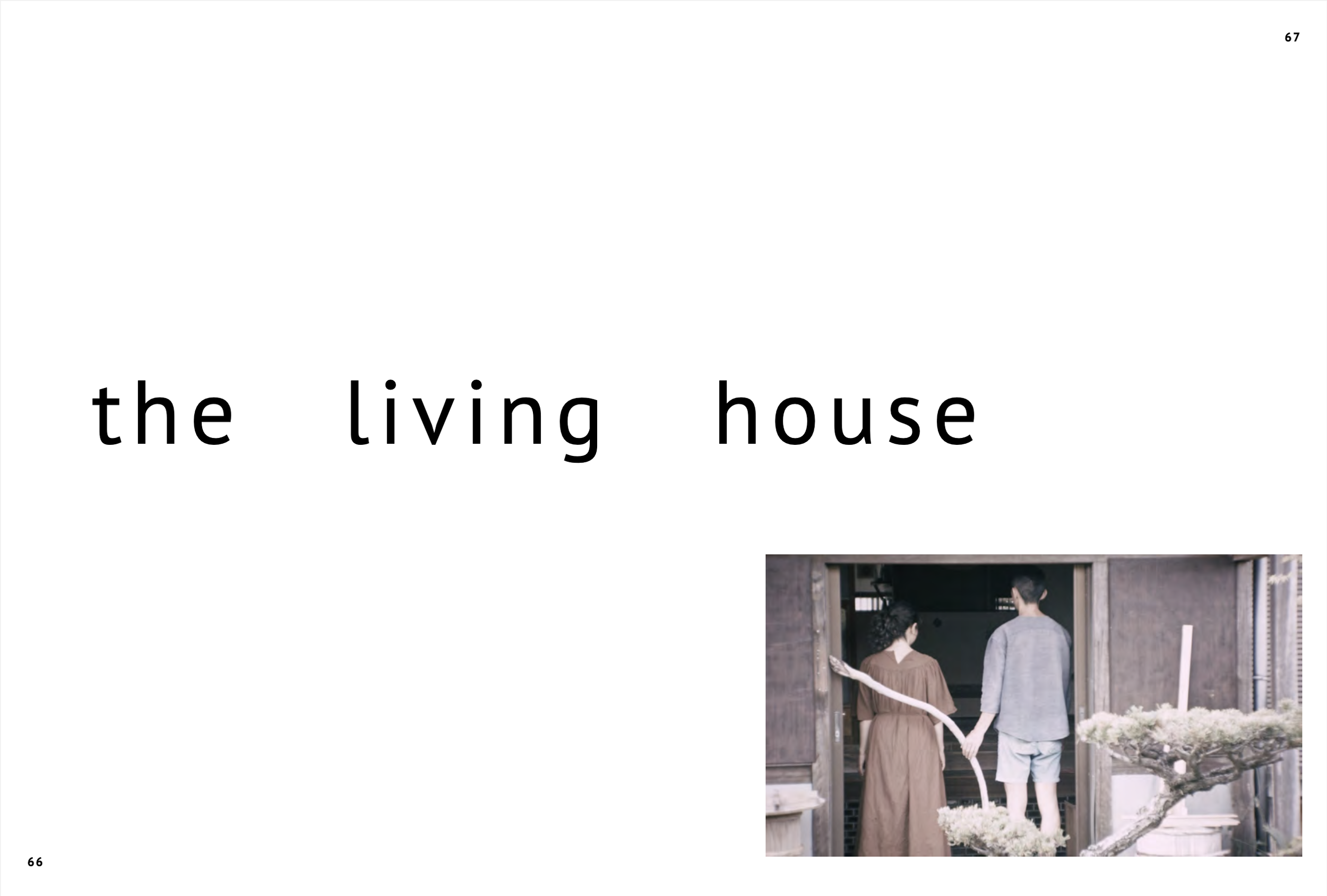
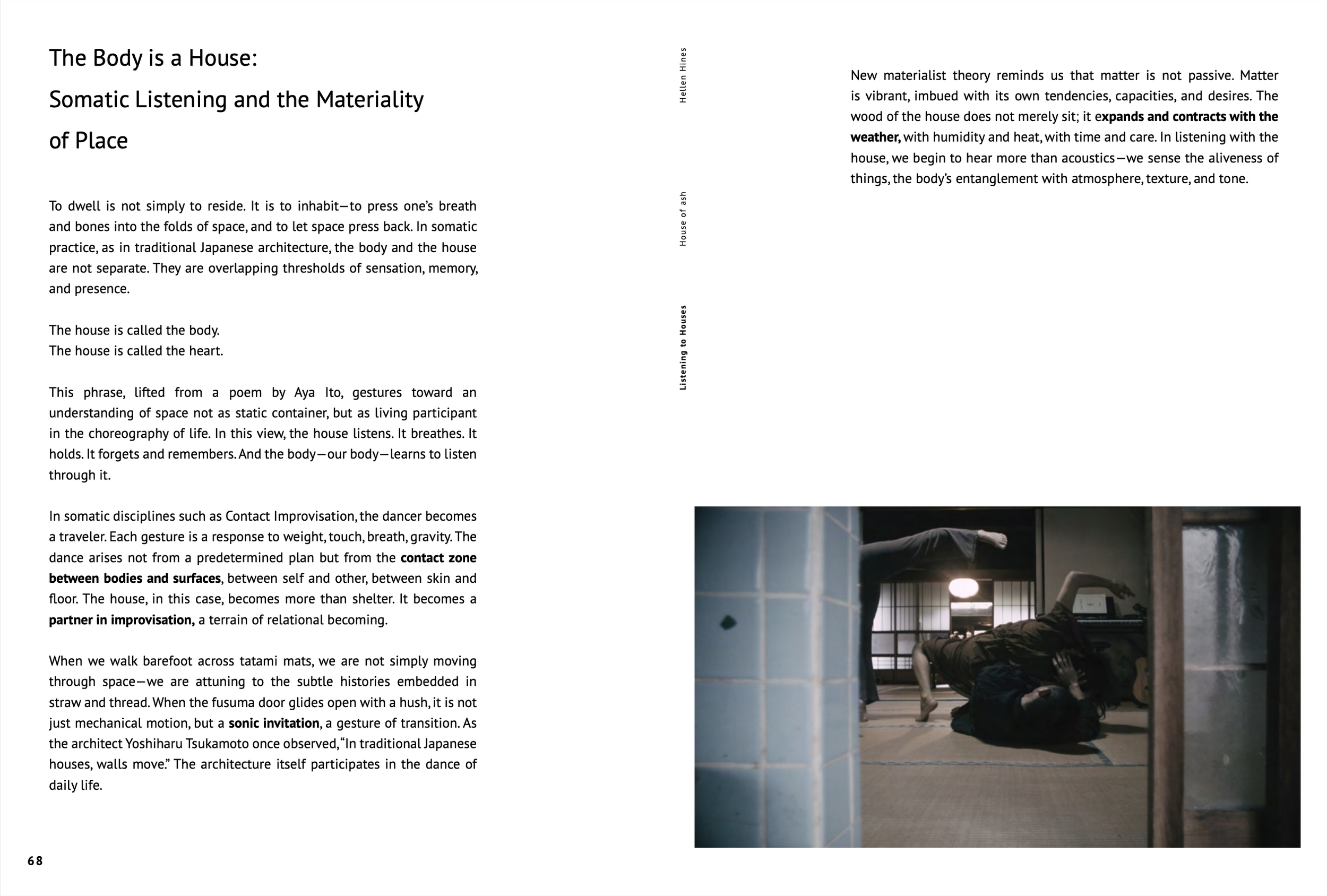
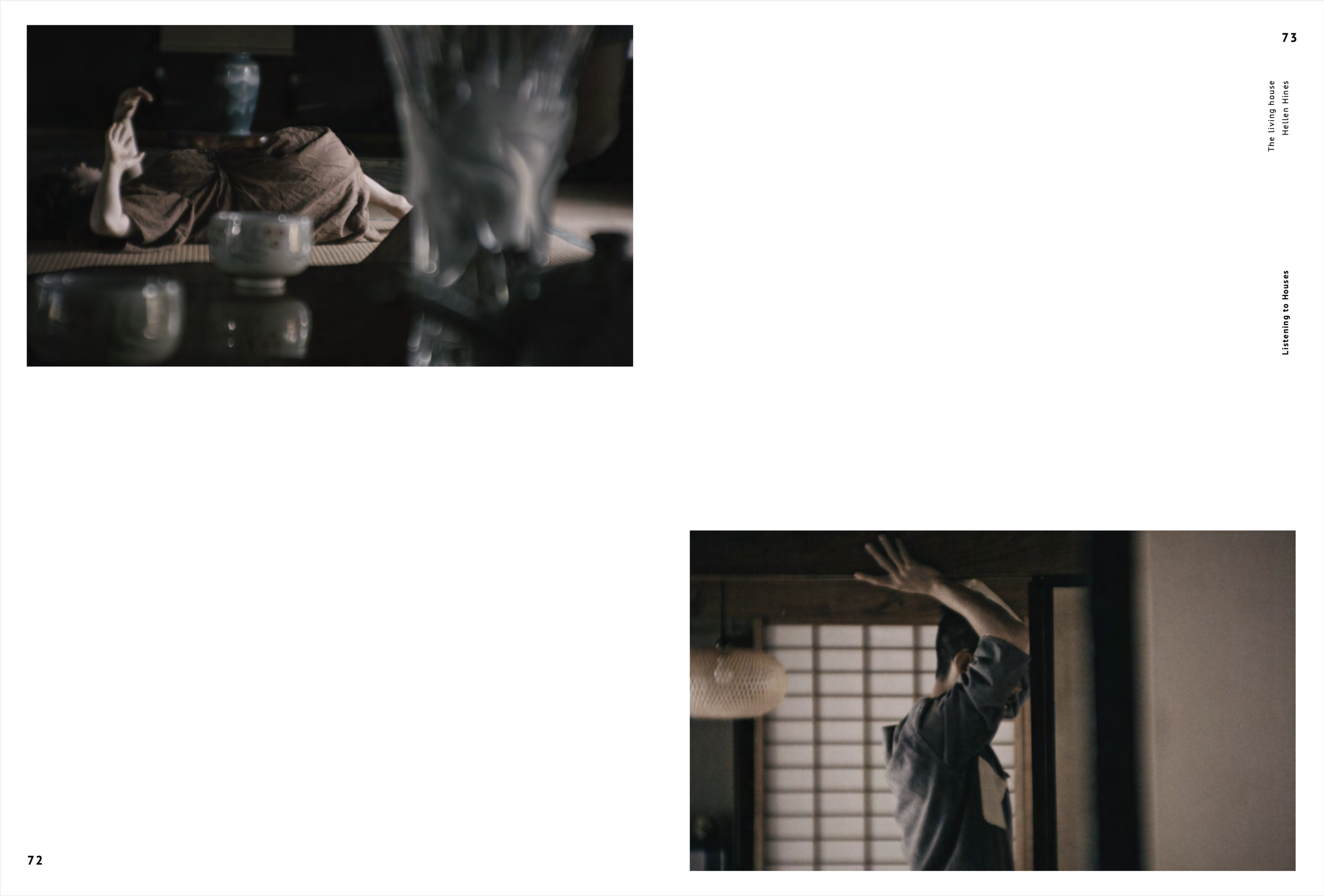
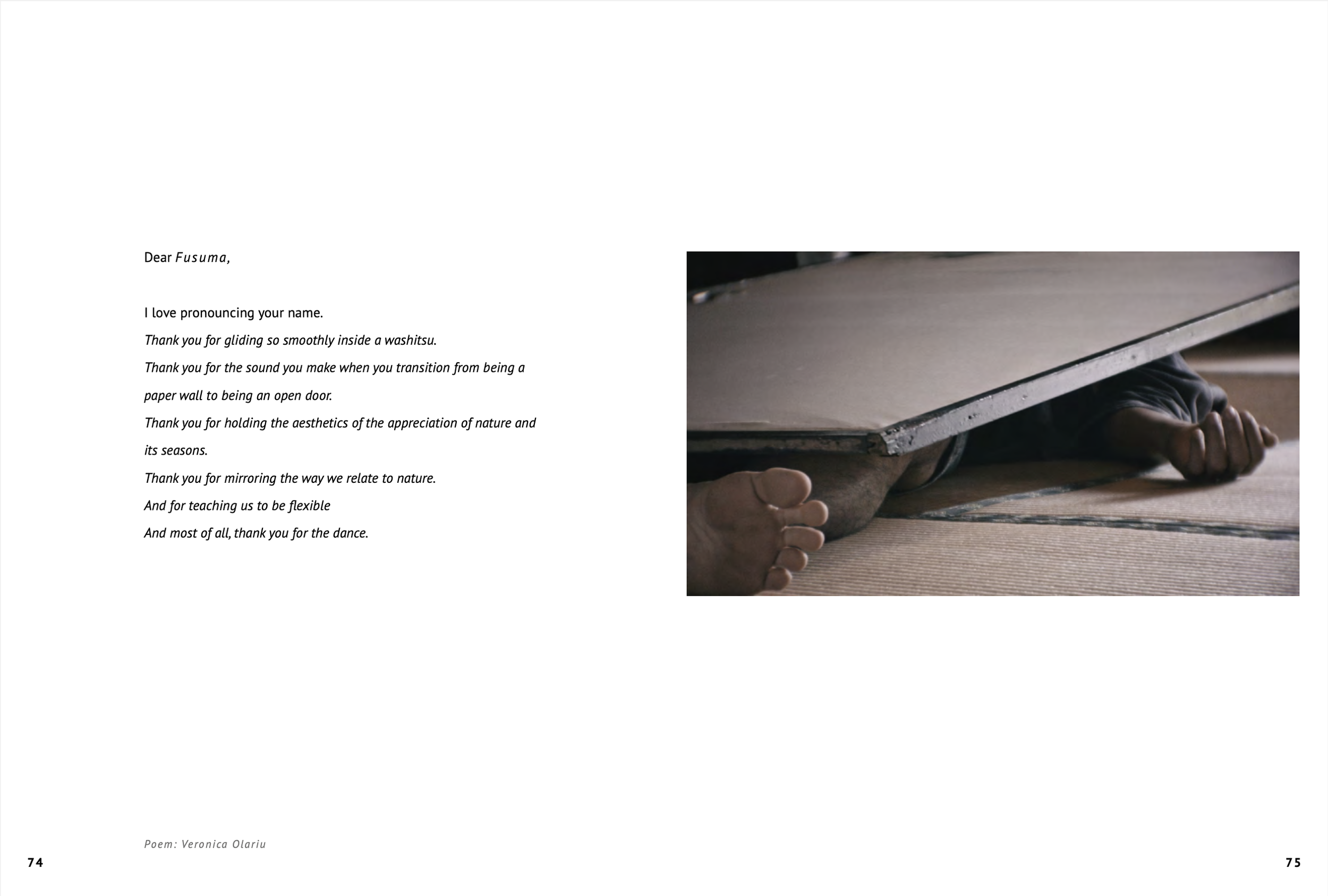
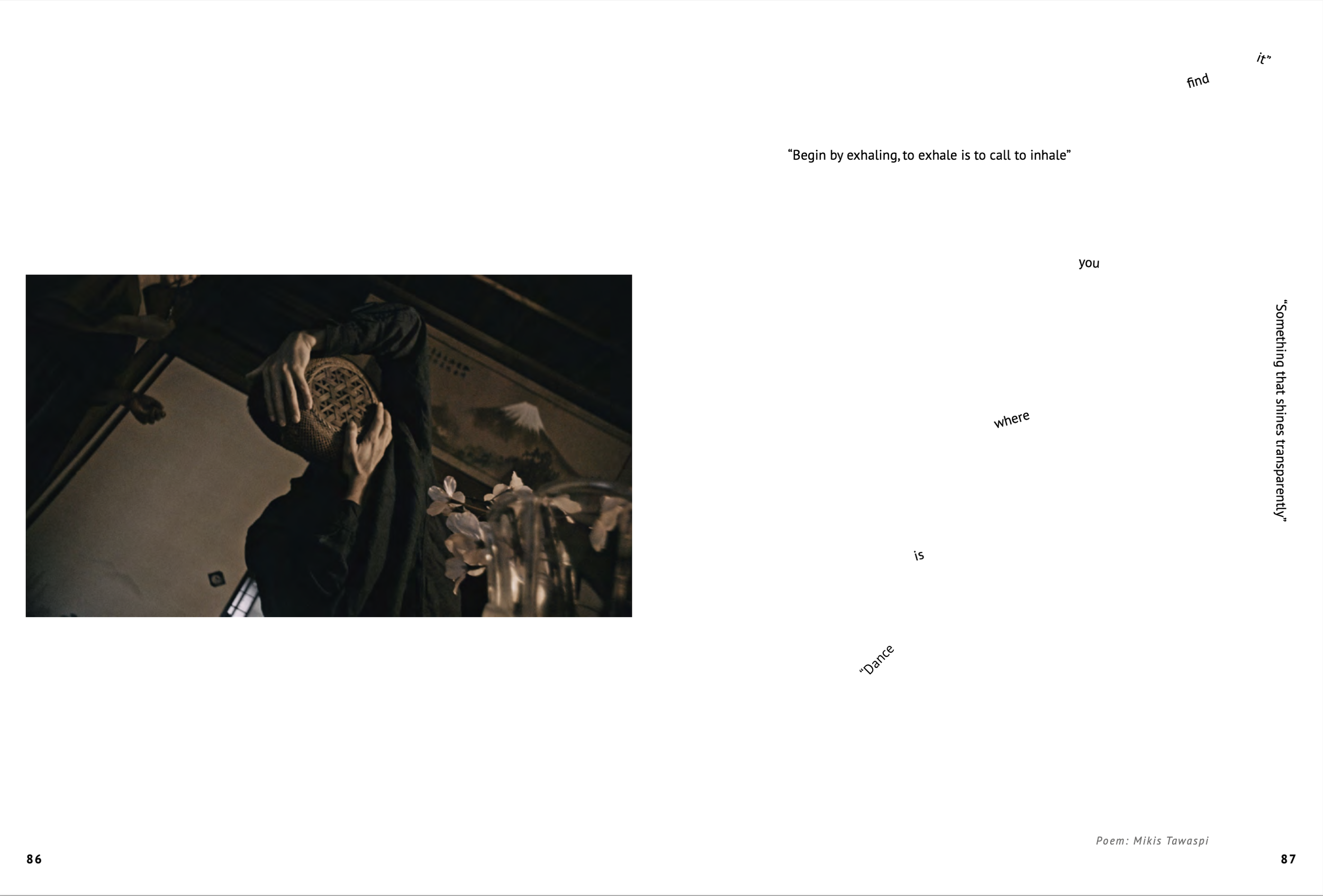
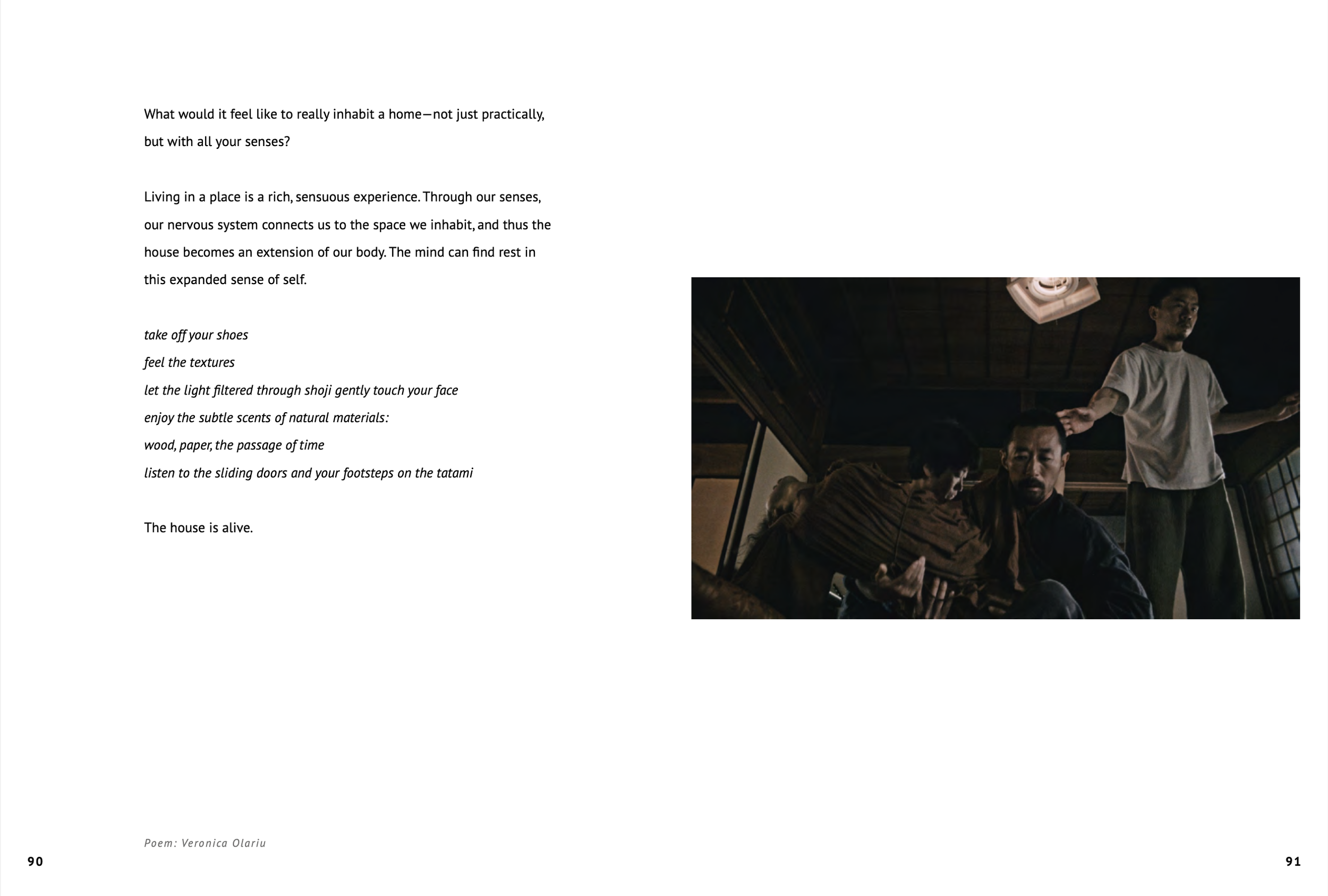
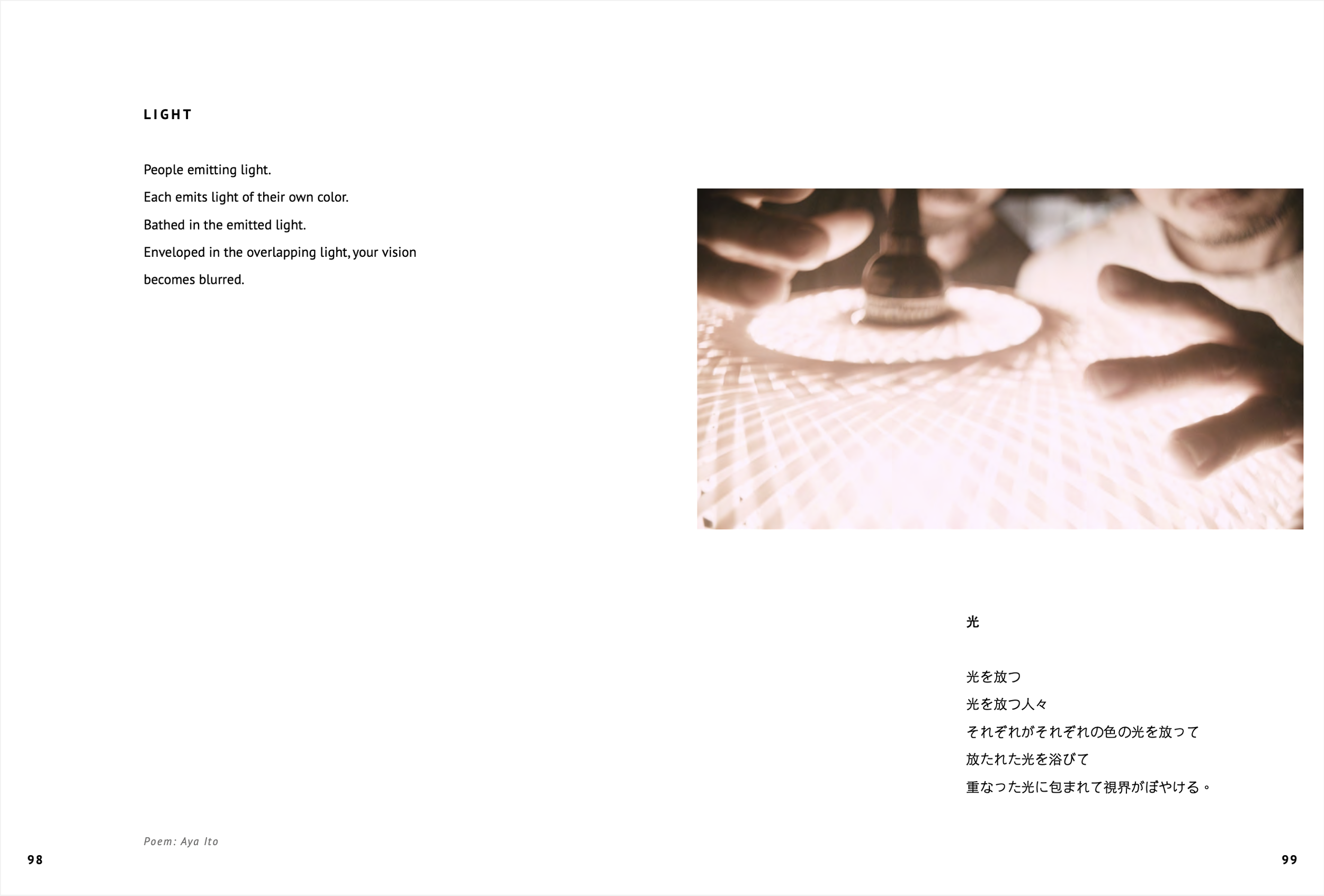
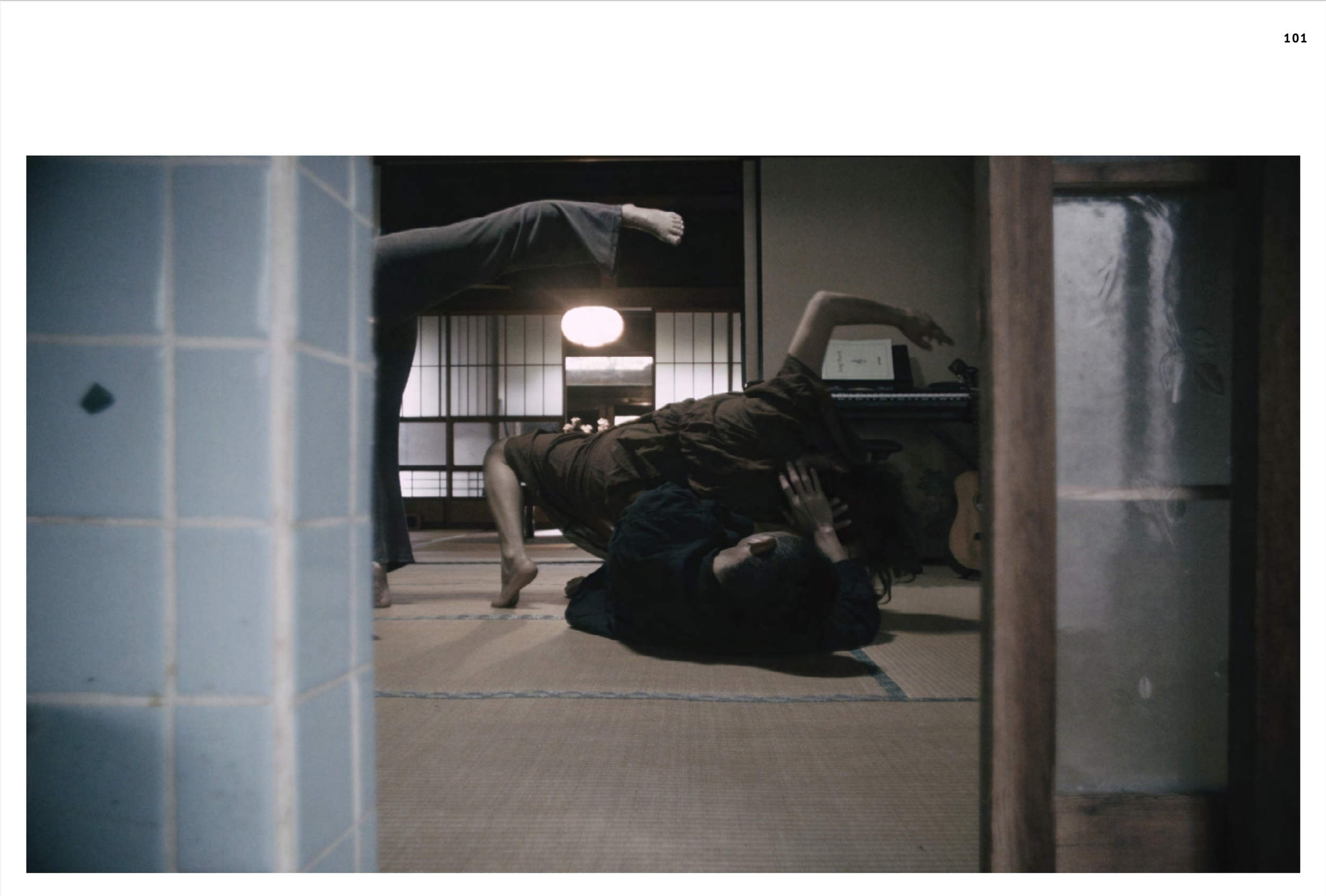
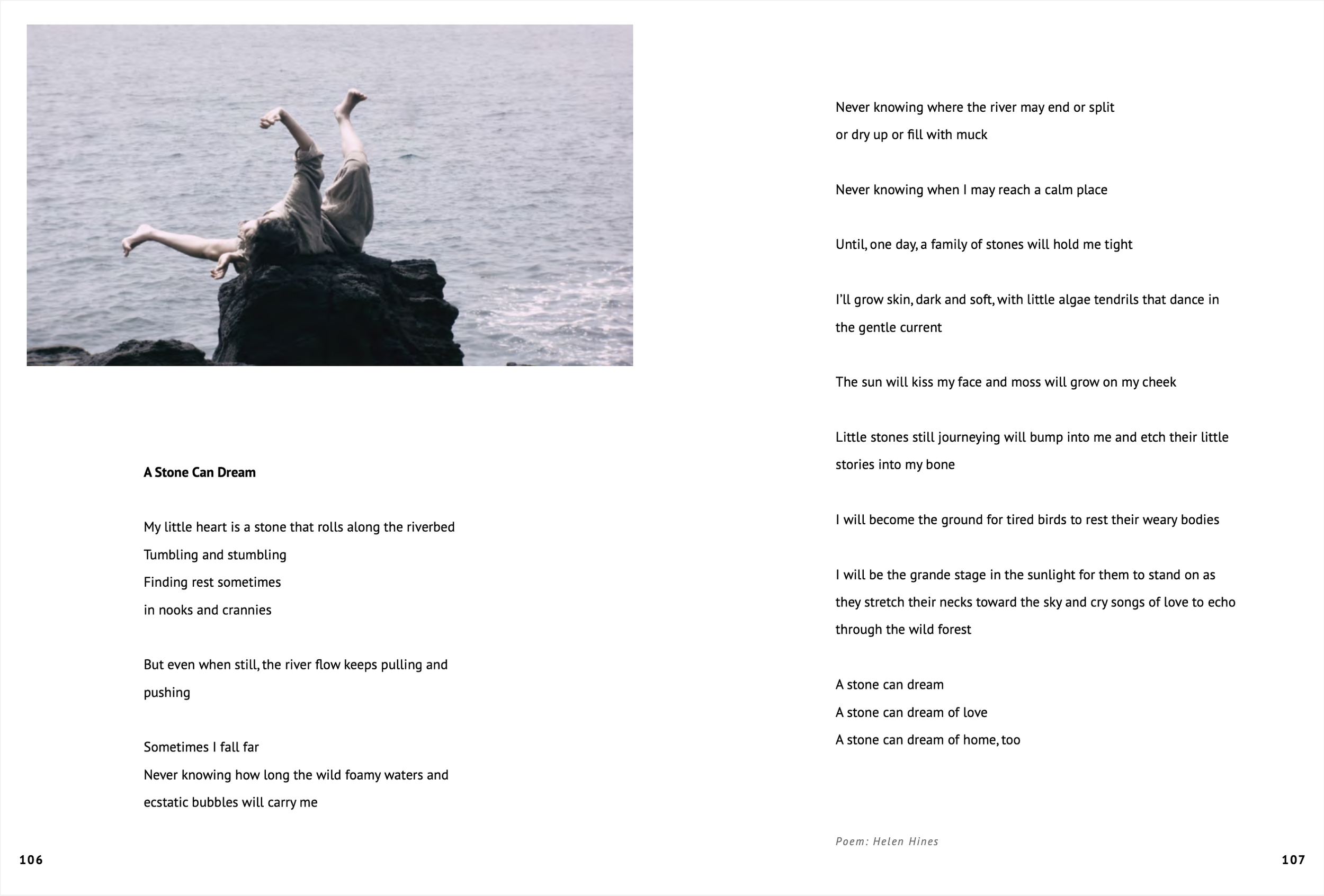
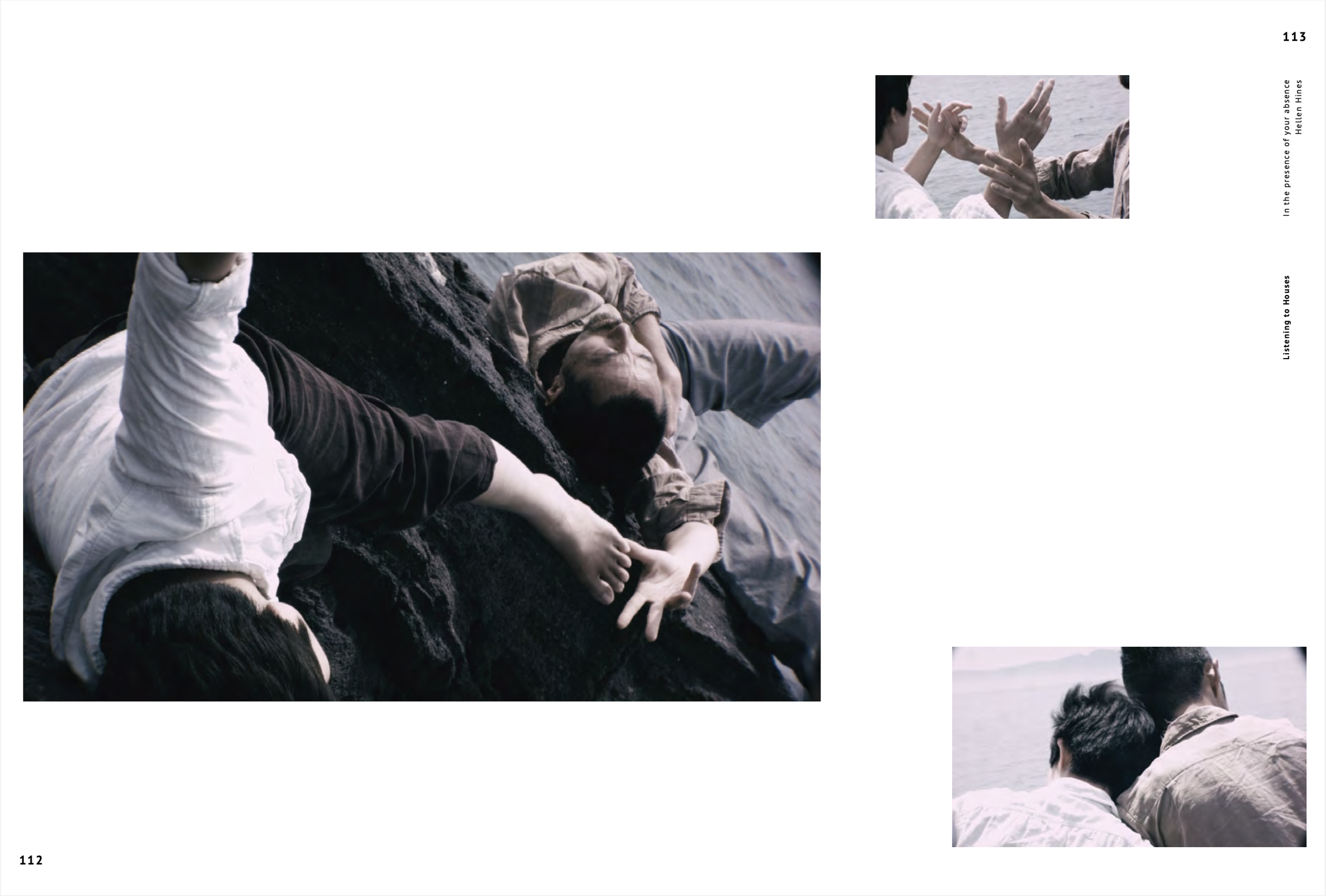
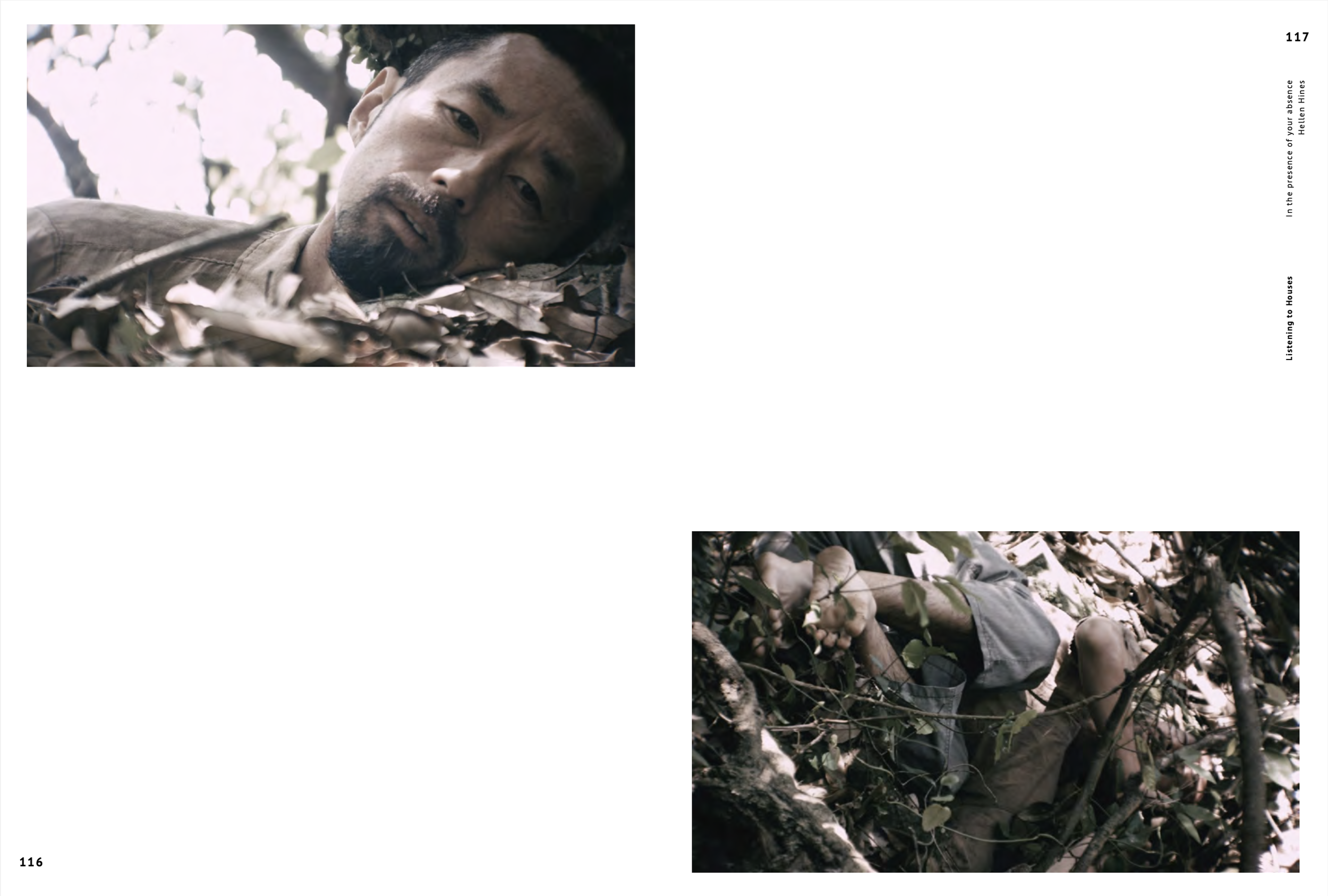
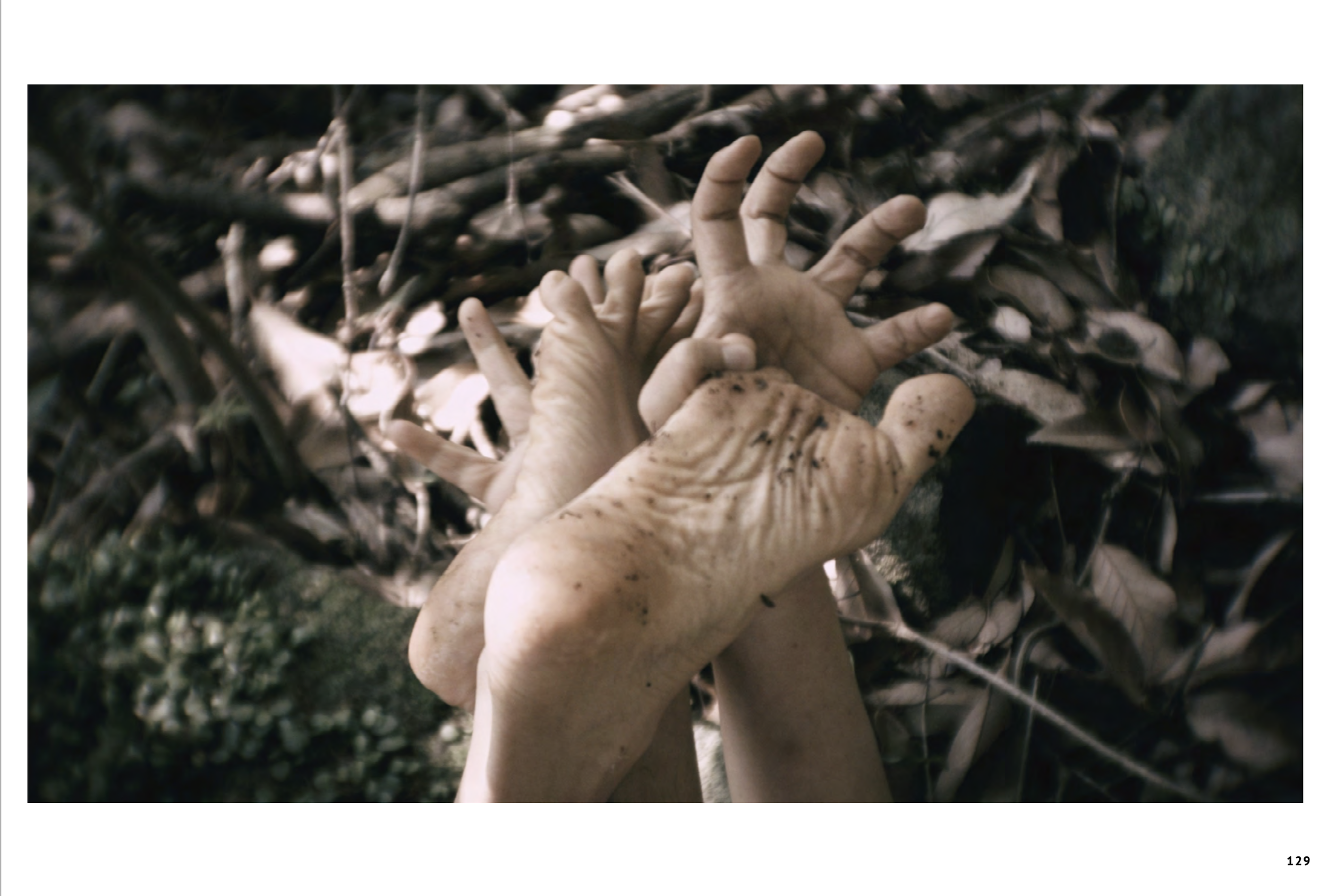
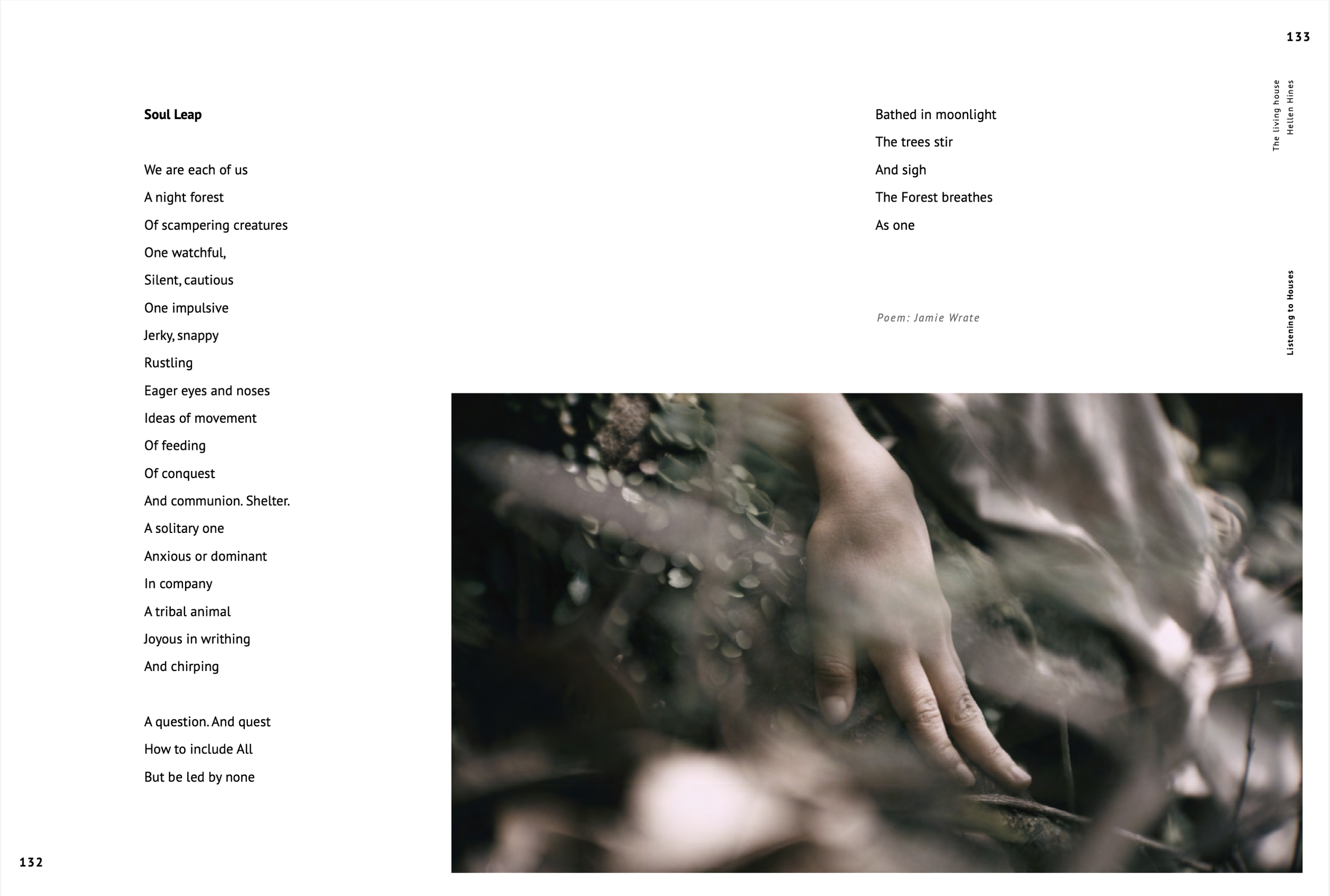
This book gathers still images from films shot over several years in three houses in Japan—each carrying its own material biography. One stands abandoned, slowly giving way to entropy. One house burned to its bones. The third is under construction by Mikis Tapaswi, temporarily inhabited as a space for dancers and artists to inhabit, who treated the unfinished site as a living partner in movement, poetry, and daily life.
These images, along with the films they are drawn from, are not representations but relations. The houses are not inert settings. They speak, they echo. They grieve and bear witness. Each house holds its own temporality and memory. Each is a participant in the improvisational unfolding of place.
In the Japanese tradition of kami, spirit is not separate from the material world but embedded within it. Stones, tools, dust, beams, shadows—these are not lifeless things. They are inhabited. They witness. They change. This animist sensibility resonates strongly with the philosophical current of new materialism, which challenges dualisms of subject/object, spirit/matter, and insists instead on entangled agencies. What if the houses are invited to be co-authors of the stories we tell? What if the project of filming them, dancing with them, and living in them was not one of extraction, but of co-listening?
Rather than claiming space or possessing stories, this book attempts to visit. As Donna Haraway writes (via Vinciane Despret), “visiting is not an easy practice; it demands the ability to find others actively interesting… to cultivate the wild virtue of curiosity.” In traditional Japanese etiquette, visitors always bring a gift—an acknowledgment of mutual indebtedness. This book, too, is offered in that spirit.
The practice of filming the houses emerged from an ethic of spiritual activism, as articulated by Gloria Anzaldúa—a praxis that recognizes the entangled nature of being and calls us to respond to the world through relational accountability, where artistic practice becomes a form of co-weaving with the more-than-human, the ancestral, and the unseen. This meant entering these spaces not as observers, but as cohabitants—even if only temporarily. It meant listening not just to stories, but to silences. As in Japanese culture, where shared silence is a form of the highest communication, these films—and the stills that comprise this book—lean into that silence, allowing room for what cannot be spoken.
The dancers, too, invited an embodied listening into the inquiry. Through Contact Improvisation, they moved in conversation with beams, light, air, rot. Their improvisations became rituals of attunement, exploring a non-possessive idea of land, home, and place. One that understands place as relation, not property.
Embedded within this work is also an anti-extractive methodology. Against the grain of colonial modes of making—where art is often a means of capture, display, and consumption—this project asks: How can we practice art as a form of visiting, listening, and co-dwelling? What would it mean to treat a crumbling house, or a pile of reclaimed wood, or a half-built studio as a collaborator rather than a backdrop?
The images and texts in this book emerge from these questions. They are not answers. They are invitations. To feel. To slow down. To recognize the material world as already alive, already in relation. To understand a house not as a possession, but as a gathering of stories, energies, presences—some visible, many not.
Like the tsukumogami of Japanese folklore—household objects that, once discarded, gain spirit and agency—these buildings contain memories and forces that do not vanish with abandonment or fire. They transform. They haunt. They invite us to ask: What is owed? To whom are we indebted? What stories do walls remember?
To enter this book is to enter into conversation. To go visiting. To offer your attention as a gift.
Client: Helen Hines